





Aad Onderwater
Business Manager Rail Machines & Logistics
Strukton Rail
Date
01 November 2022
Expertises
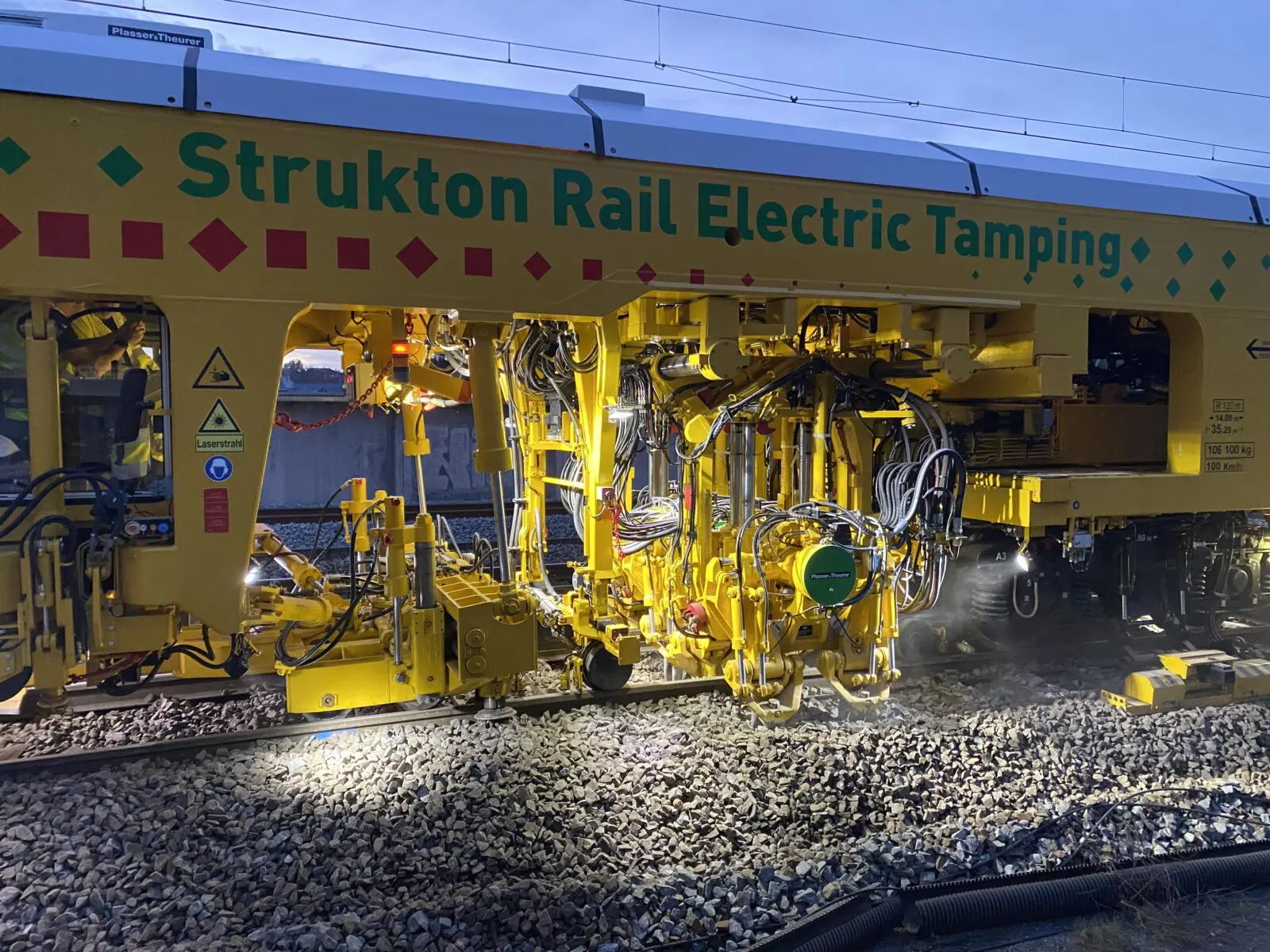
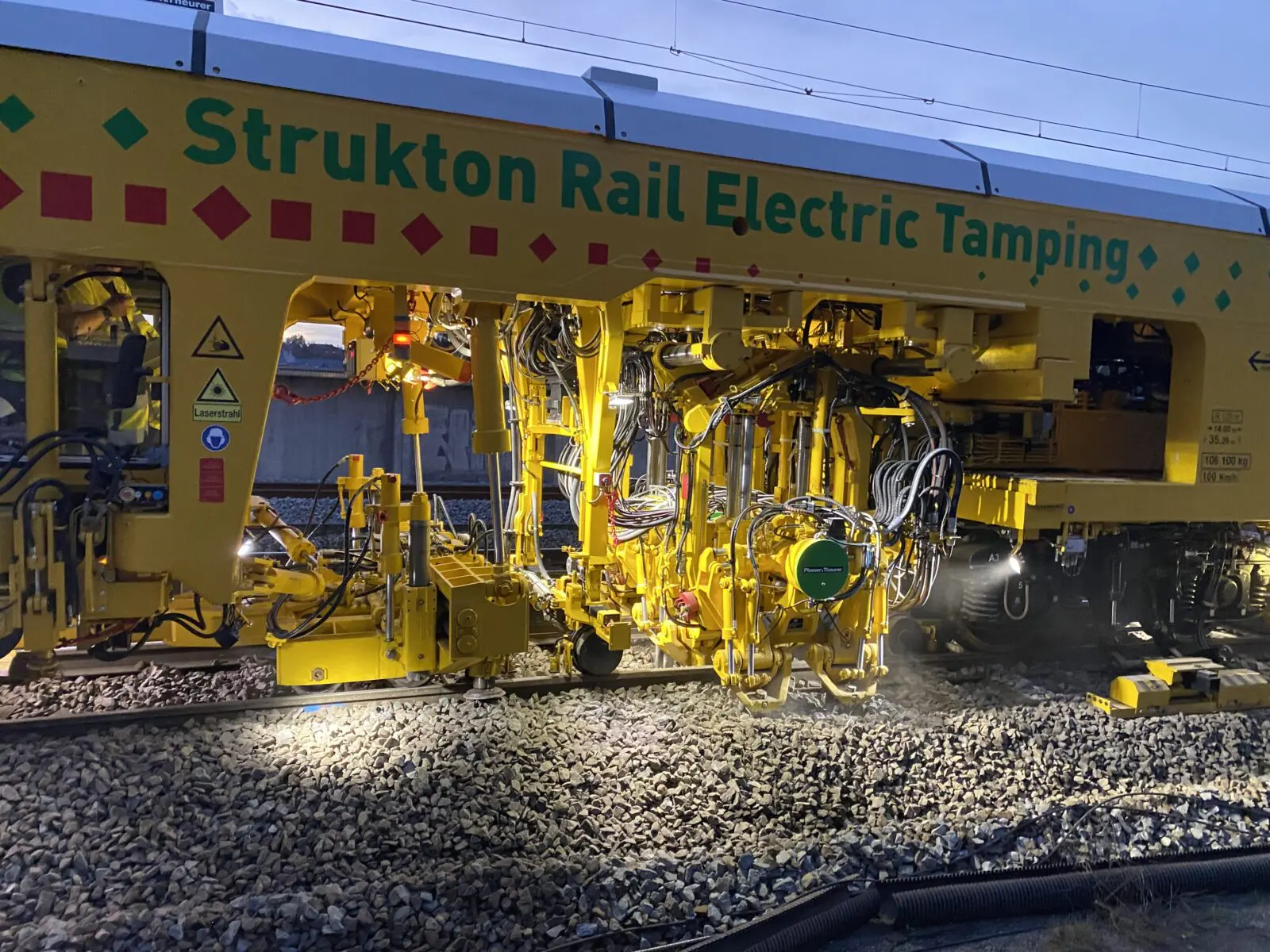
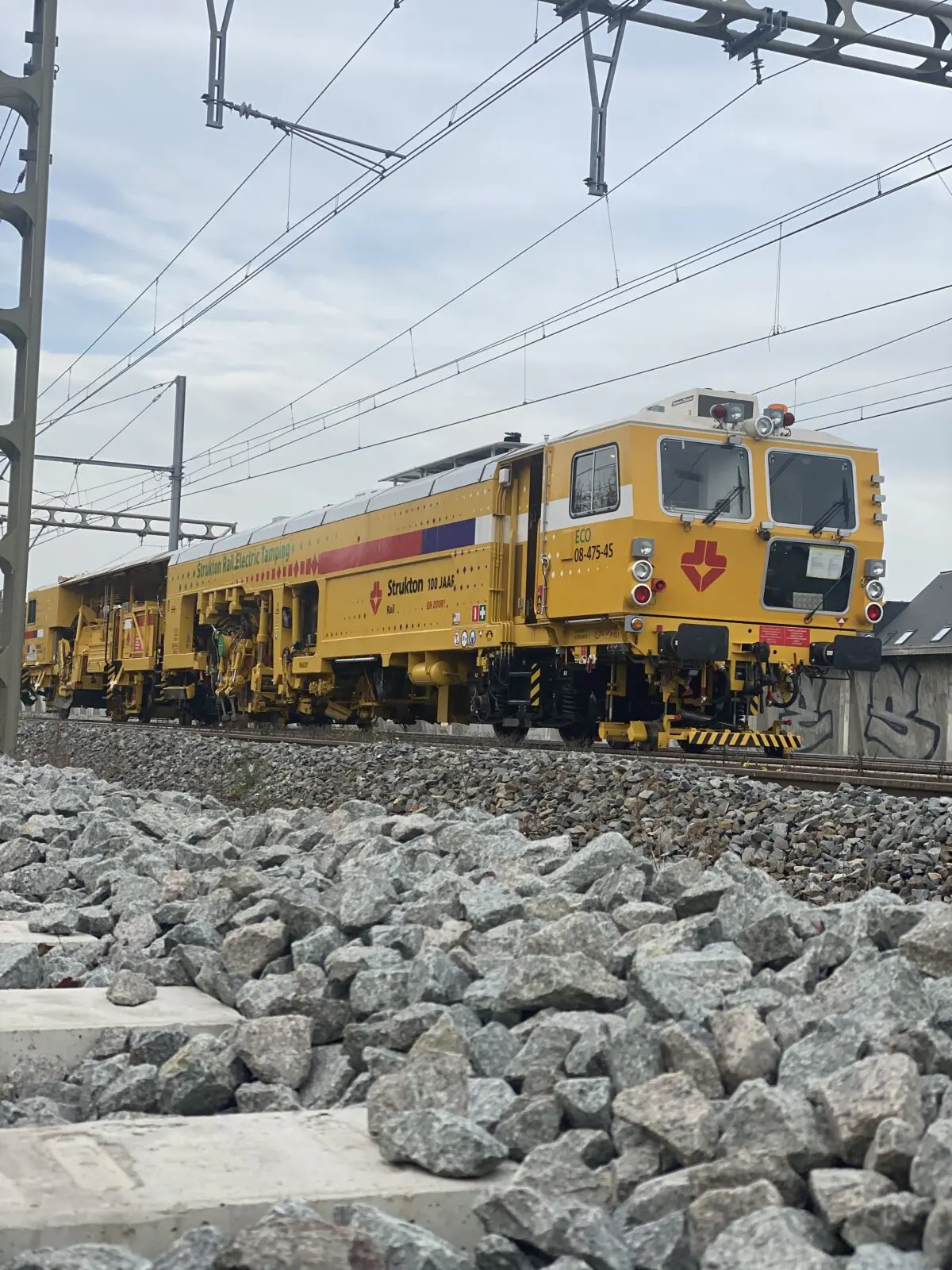
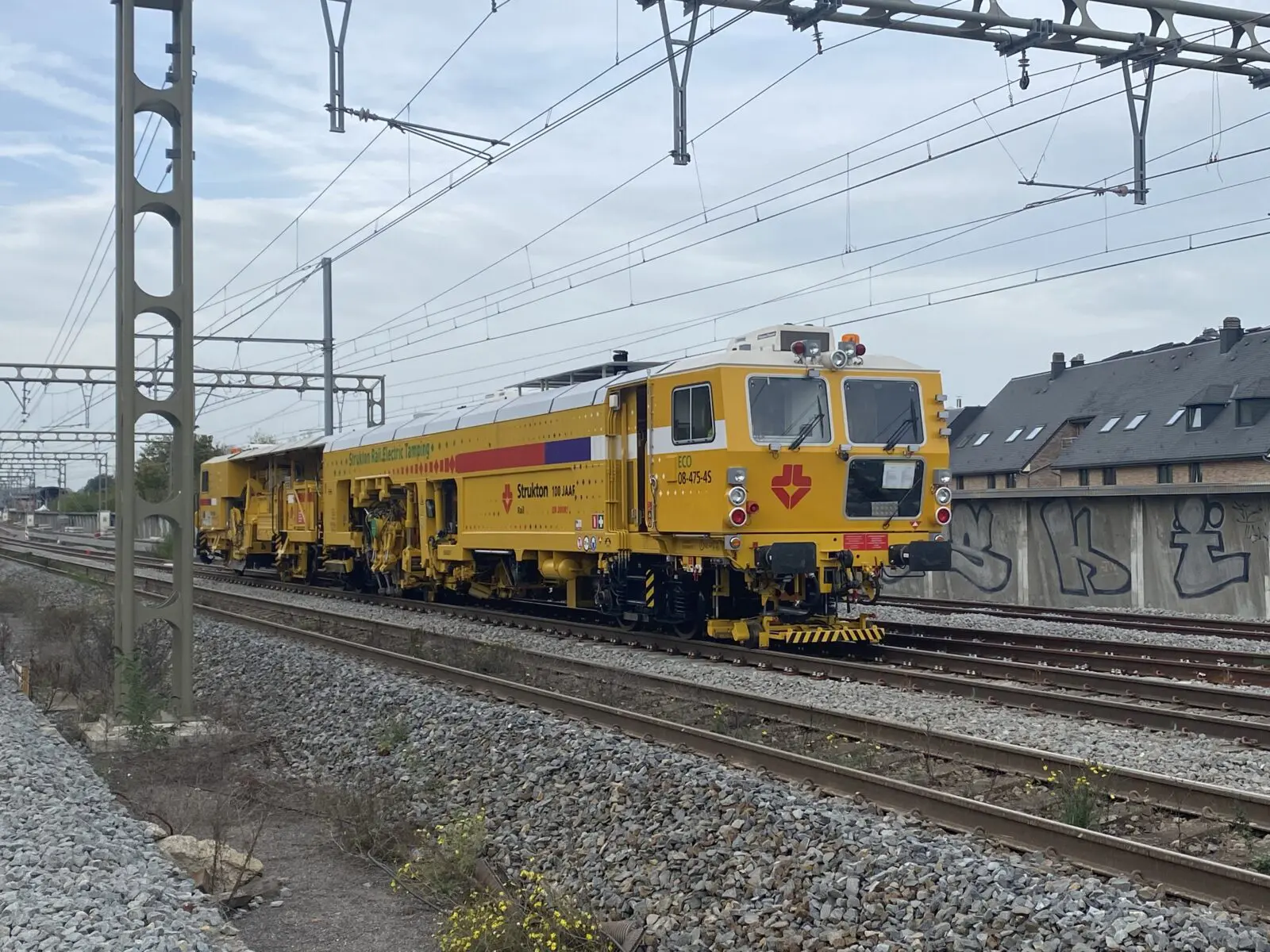
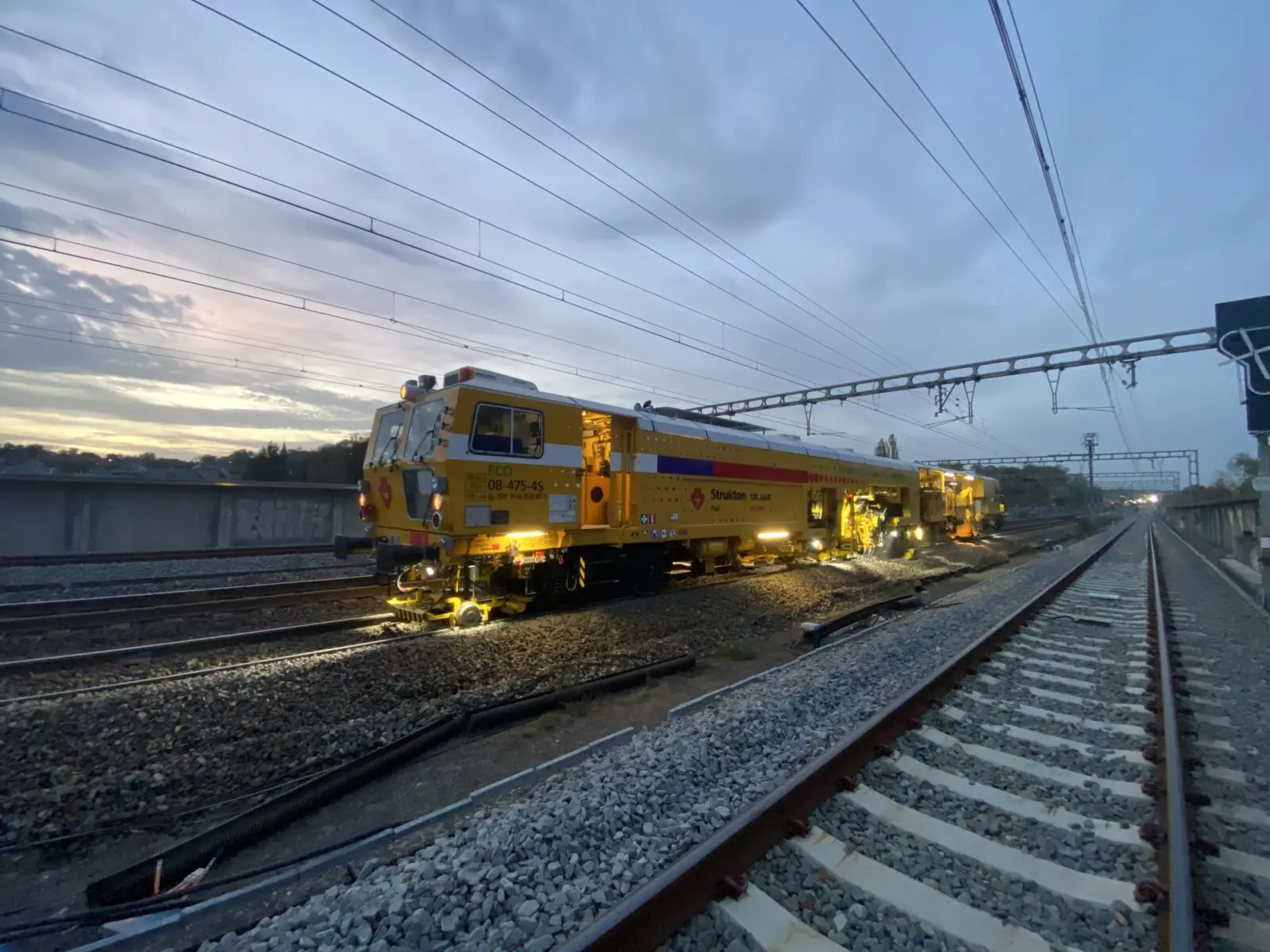
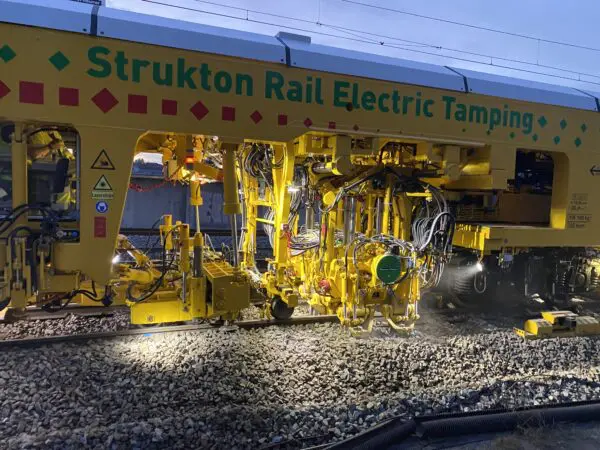
Following drastic damage repairs, a major overhaul and a sustainable retrofit, we have put our Unimat 7 switch tamping machine hard at work for the past few weeks. During the weekend of 29 and 30 October, the machine was in service in Ottignies. The machine, manufactured in 2004, is now considerably more sustainable than before. It is the first refurbished tamping machine in the world with electrically driven tamping units. The result: a 20% reduction in fuel consumption, lower CO2 emissions and a 5-decibel reduction in noise levels.
The Unimat was heavily damaged during a derailment in Belgium. In April 2020, we decided to invest in repair. A decisive factor was that the machine, which has more country type approvals than any other, is very important to Strukton. We undertook the repair so we could have the eight-year overhaul carried out at the same time, a kind of mandatory safety check, and improvements.
“We have a special relationship with railway machinery manufacturer Plasser & Theurer and they know we are open to innovation. In mid-2021 they approached us asking if we would be interested in converting the tamping units, which are normally driven hydraulically, to electrically driven units. We decided to accept their proposal and this is why the tamping unit, which is the largest consumer of energy, is now electrically driven. This makes it possible to reduce the machine’s diesel engine’s RPMs. This translates into considerable fuel savings of approximately 20%, and therefore also reduces CO2 emissions. This is further supplemented with a reduction in noise.” Jeroen Smoes, Head Machinery at Strukton Rail Equipment
Due to the retrofit, fuel consumption has dropped by as much as 20%, CO2 emissions are reduced and noise levels have gone down by 5 decibels.
In addition, the work’s quality has improved. A hydraulic motor normally drives the power generators, but with an electric motor you can adjust the required power far more precisely. This improves the quality of the work produced by the machine. Moreover, this also reduces wear and tear, as a result of which the tamping units are expected to have a longer service life.’
Aside from the retrofit with the sustainable electric tamping units, we made a number of other improvements as well.
“We had a spraying system built onto the sweeper brush unit to counter dust development. In addition, a new and improved air conditioning system has been installed. Furthermore, the machine was equipped with an entirely new motor and an overhauled drive, new parts and an up-to-date computer measuring system.” Jeroen Smoes, Head Machinery at Strukton Rail Equipment
We will continue innovation and are now going to generate our own electricity. There is a chance that we will be able to use the excess power to electrically drive other things as well. This will even further reduce the flow of oil and CO2 emissions. Another innovation is the 56 sensors that have been installed inside and on the outside of the tamping units. We are collecting a great deal of data to gain even more knowledge, so that we can still more accurately predict wear and tear, for example. Over the coming 3 to 4 years we will be collecting and interpreting all of this data in close cooperation with Plasser & Theurer.
We have a social role in creating and maintaining safe and accessible infrastructure and a sustainable living environment. We are proud of this. However, our sector also has a significant impact on society in terms of the use of raw materials, the production of waste and emissions, and biodiversity. This implies a major responsibility, as well as opportunities for sustainability. This is why we have adopted a structural approach to working on corporate social responsibility (CSR) with a focus on the long term. We do this on the basis of the entire chain.
The first refurbished tamping machine in the world with electrically driven tamping units working in Ottignies.
Business Manager Rail Machines & Logistics
Strukton Rail
Sustainability in rail and civil engineering focuses on reducing environmental impact across the entire lifecycle of infrastructure. This includes using emission‑free equipment, circular and recycled materials, and designing assets with a longer lifespan and lower maintenance requirements. Reusing structural components—such as circular viaduct beams or recycled copper contact wires for overhead lines—significantly reduces CO₂ emissions while conserving valuable raw materials.
CO₂‑reduction is achieved through a combination of clean construction methods and material innovation. Key strategies include:
These measures not only reduce carbon emissions but help create more resilient, future‑proof infrastructure.
Infrastructure projects increasingly rely on advanced sustainable technologies, such as:
These innovations drive measurable environmental benefits throughout the asset lifecycle.
Zero‑emission equipment refers to machinery that operates without producing exhaust gases, typically powered by electricity or batteries. Examples include:
This equipment eliminates local emissions, improves air quality around work sites, reduces noise pollution and helps clients comply with increasingly strict sustainability requirements.
By 2050, the infrastructure sector aims to be fully climate‑neutral. This future includes:
The transition is already underway, driven by innovation, collaboration and long‑term thinking.
Railway construction in European urban areas faces several challenges, including limited space, strict environmental regulations and the need to manage noise and vibration in line with European rail standards. Complex public transport networks, high population density and the demand for uninterrupted urban mobility add further constraints.
The cost of constructing a new railway line in Europe depends on several key factors, including route length, local geography, environmental requirements and the complexity of the surrounding rail infrastructure. Prices can range from several million to hundreds of millions of euros, depending on whether the project involves urban environments, tunnels, bridges or upgrades to existing public transport networks.
Strukton delivers tailored railway engineering solutions and provides expert advice on cost optimisation through smart design, efficient project planning and sustainable construction techniques. By applying innovative technologies and meeting European rail standards, we help clients reduce lifecycle costs while ensuring reliable, future‑proof transport connections.