





Robert Galjaard
Innovator
Date
21 June 2021
Expertises
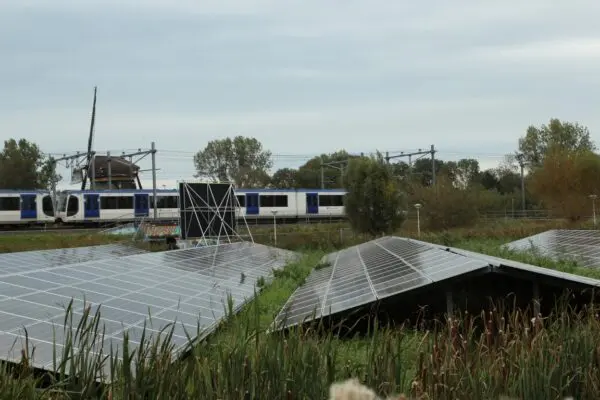
A unique connection between the eco solar park ‘t Oor in The Hague and the power grid of regional operator HTM allows trams of Randstadrail 3 and 4 to run on solar power. A great story to tell today, on the longest day of the year.
HTM is a public transport company in the Netherlands operating trams, light rail and buses in The Hague. With our contribution to the development of the eco solar park we have made another step in our sustainable ambitions. Between the tracks near Mariahoeve and Voorburg, 4,700 solar panels were installed, producing over 1.5 Gigawatt hours per year.
“We were leading in the project, connecting the customer, contractor and subcontractors. We acted as the pivot in the organisation. This kind of application of solar energy is an entirely new development. The alignment of the requirements therefore took quite some effort.” Gertjan van Keulen, Project Coordinator at the Cables and Pipelines Division of Strukton Rail Netherlands
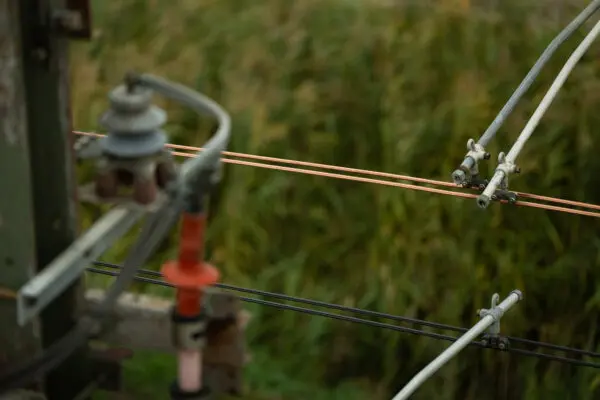
On behalf of Sunprojects, Strukton Rail laid the 10 kV cables to connect the high voltage to the HTM grid. We also led the installation of the substation and were responsible for other cabling work. The high yield makes this project special. Normally, the direct current is converted into alternating current and fed into the public grid. Energy loss occurs due to the conversion and transportation of energy. We have applied an innovative method allowing the generated direct current of the solar panels to be transported directly to the overhead lines, which minimises this loss. This means a possible breakthrough for a new standard in directly supplying sustainable electricity to rail networks.
Gertjan is enthusiastic about the project that was done successfully last year.
“This is a unique development in the field of the energy transition that I would be happy to explore further. The plans are at an early stage, but we are definitely considering this. The opportunities are technically available for trains as well, by e.g. connecting the catenary system to solar power. Railway lines are often located on fallow pieces of land, which are highly suitable for solar parks.” Gertjan van Keulen, Project Coordinator
Innovator
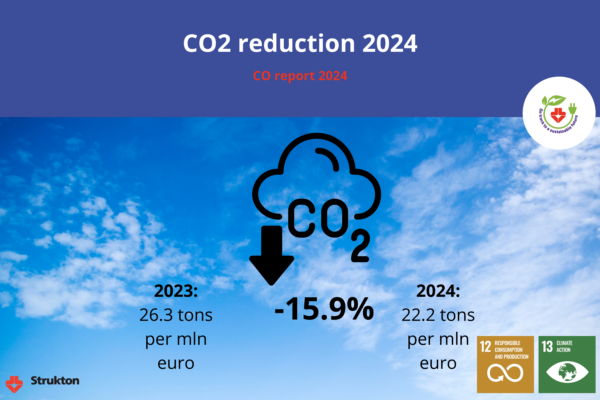
Sustainability in rail and civil engineering focuses on reducing environmental impact across the entire lifecycle of infrastructure. This includes using emission‑free equipment, circular and recycled materials, and designing assets with a longer lifespan and lower maintenance requirements. Reusing structural components—such as circular viaduct beams or recycled copper contact wires for overhead lines—significantly reduces CO₂ emissions while conserving valuable raw materials.
CO₂‑reduction is achieved through a combination of clean construction methods and material innovation. Key strategies include:
These measures not only reduce carbon emissions but help create more resilient, future‑proof infrastructure.
Infrastructure projects increasingly rely on advanced sustainable technologies, such as:
These innovations drive measurable environmental benefits throughout the asset lifecycle.
Zero‑emission equipment refers to machinery that operates without producing exhaust gases, typically powered by electricity or batteries. Examples include:
This equipment eliminates local emissions, improves air quality around work sites, reduces noise pollution and helps clients comply with increasingly strict sustainability requirements.
By 2050, the infrastructure sector aims to be fully climate‑neutral. This future includes:
The transition is already underway, driven by innovation, collaboration and long‑term thinking.
Expanding the electricity grid is crucial to support increasing demand from renewable energy, electric mobility, gas‑free homes and growing data‑center capacity. A larger and stronger grid ensures reliability, prevents congestion and enables the seamless integration of solar, wind and other sustainable energy sources.
Modern energy networks rely on extensive civil engineering works, including the construction of high‑voltage substations, transmission‑line foundations, access roads, cable routes and site preparation for electrical stations. These works form the physical backbone that allows grid operators to expand capacity safely and efficiently.