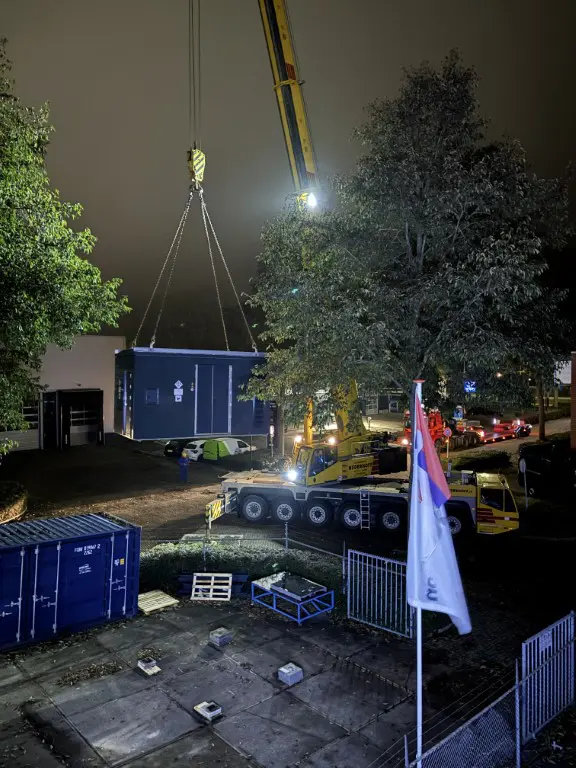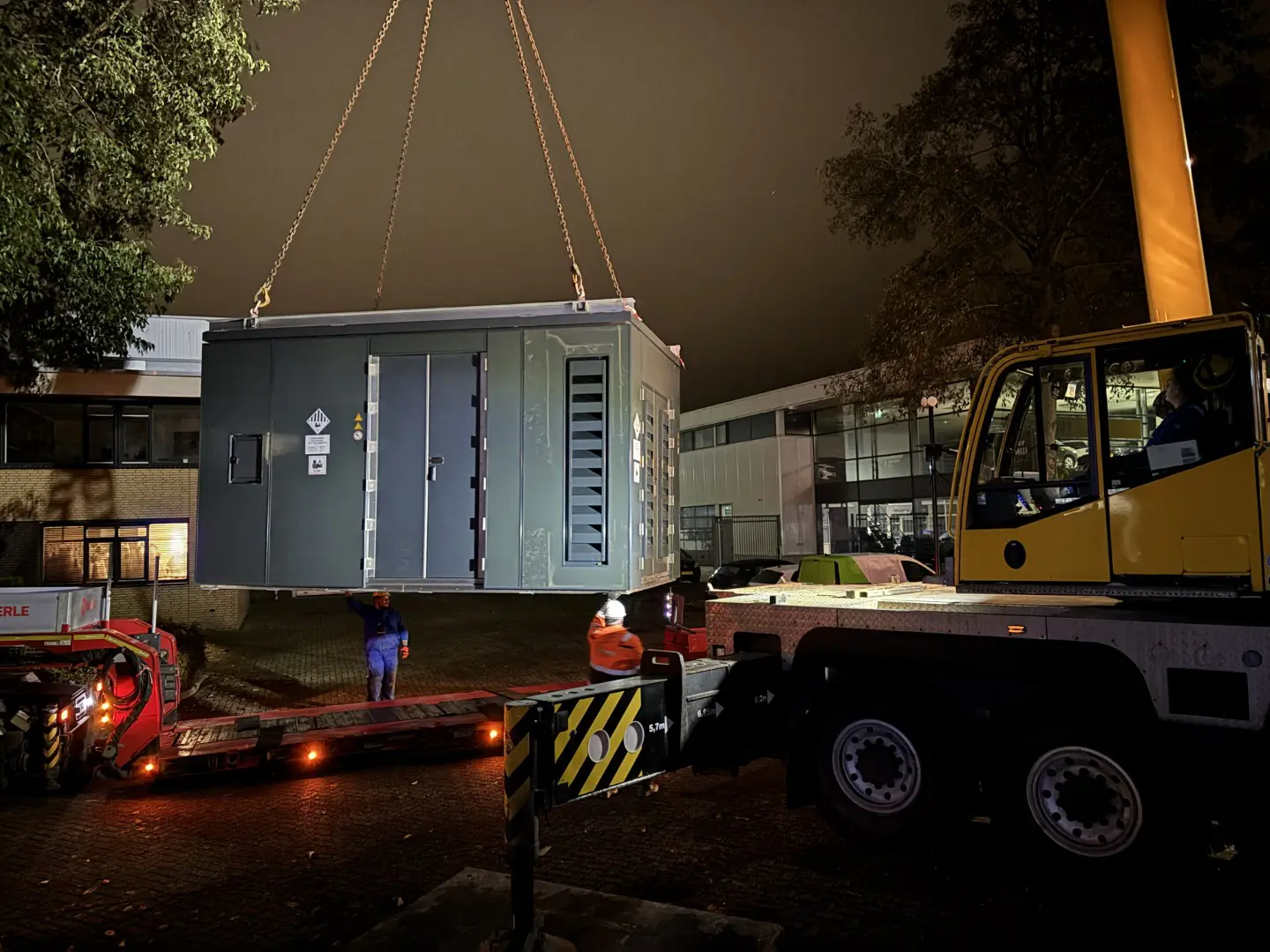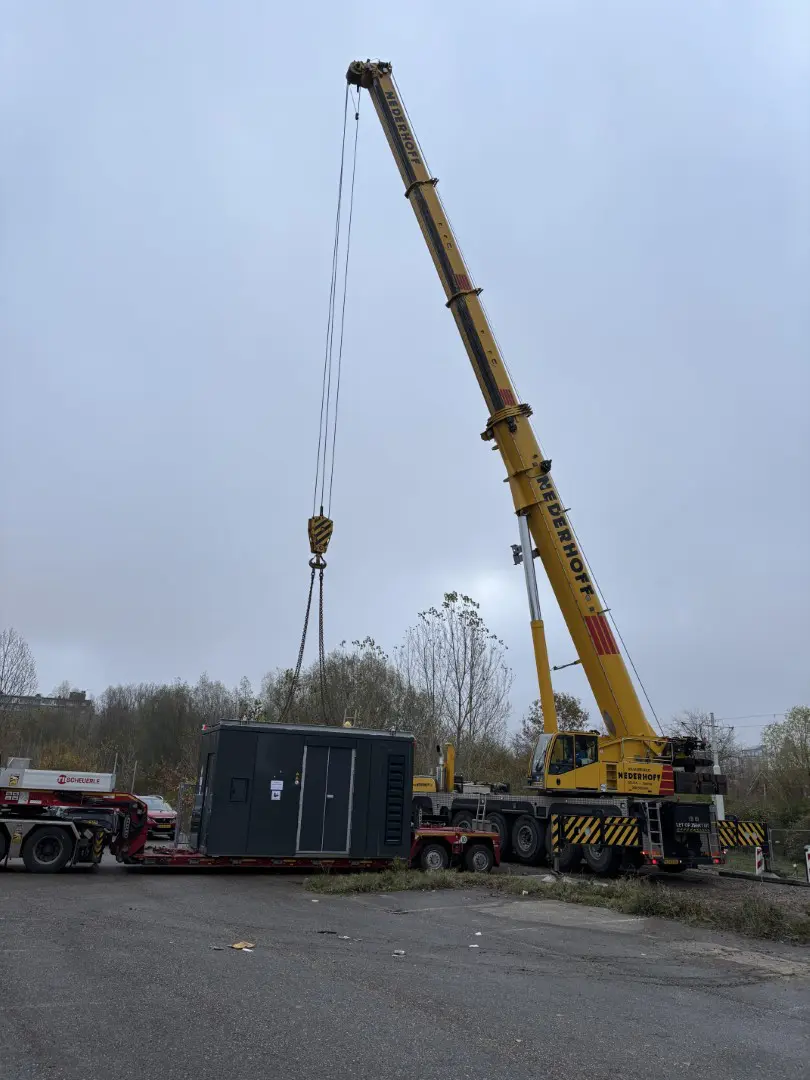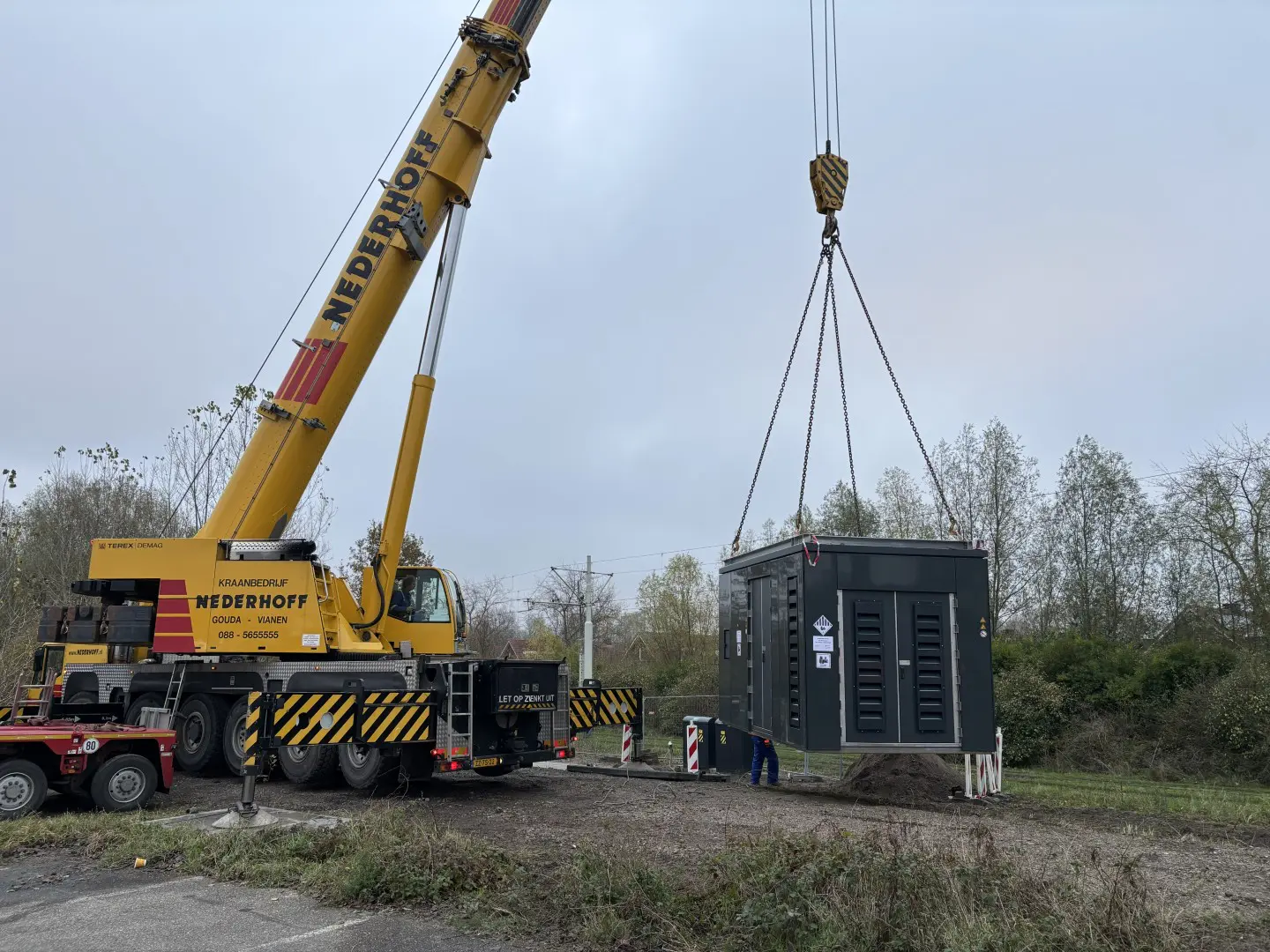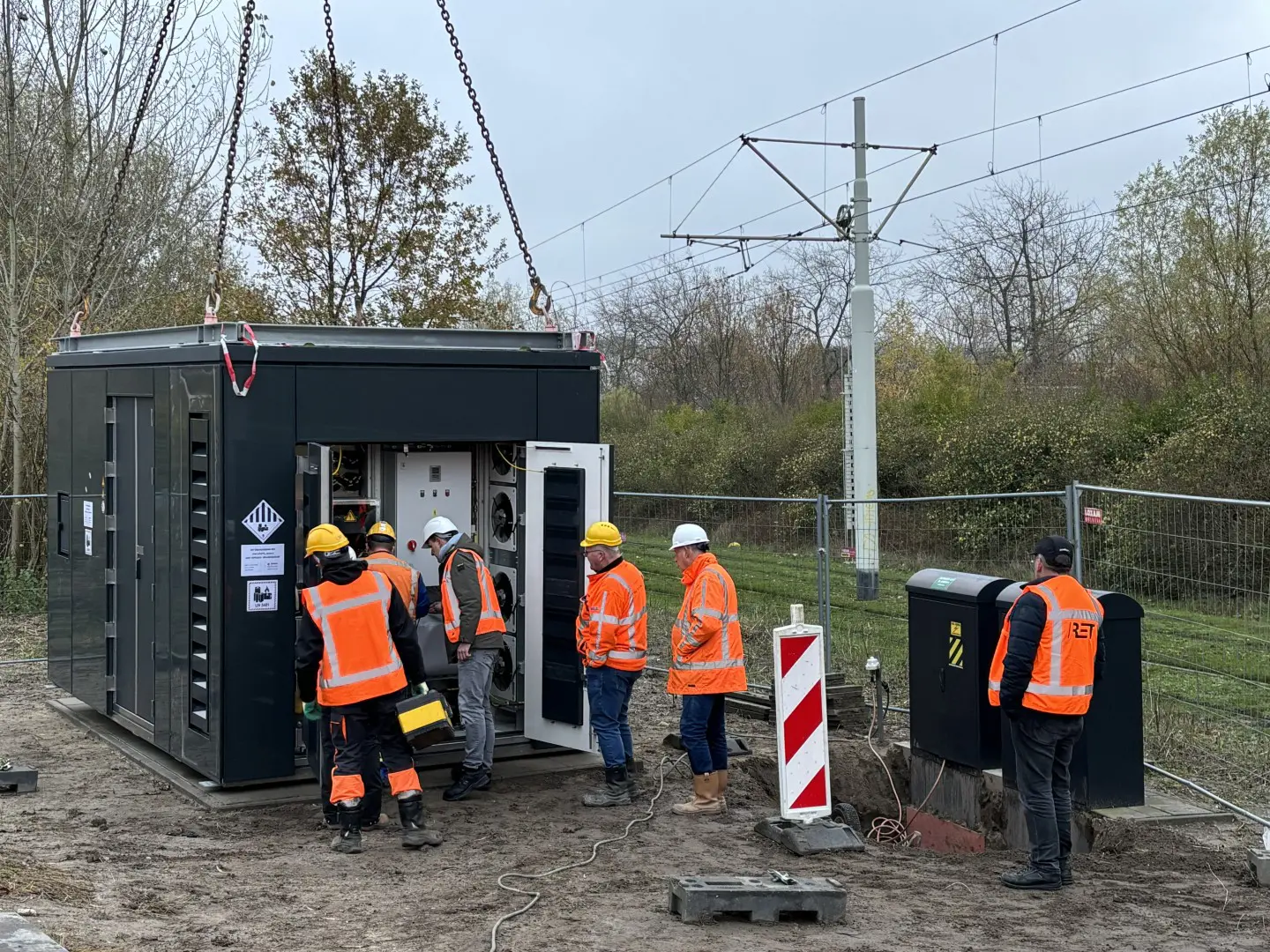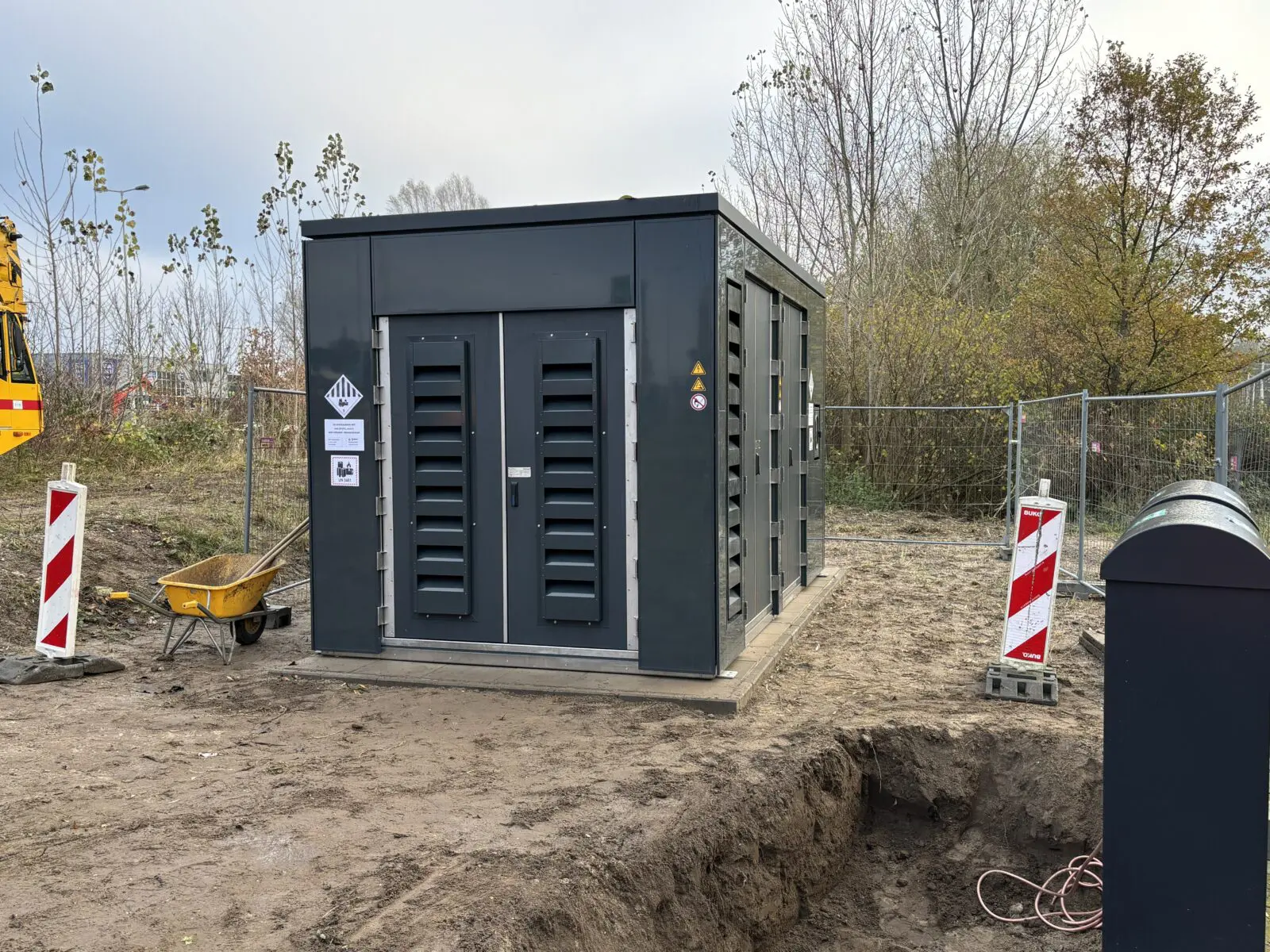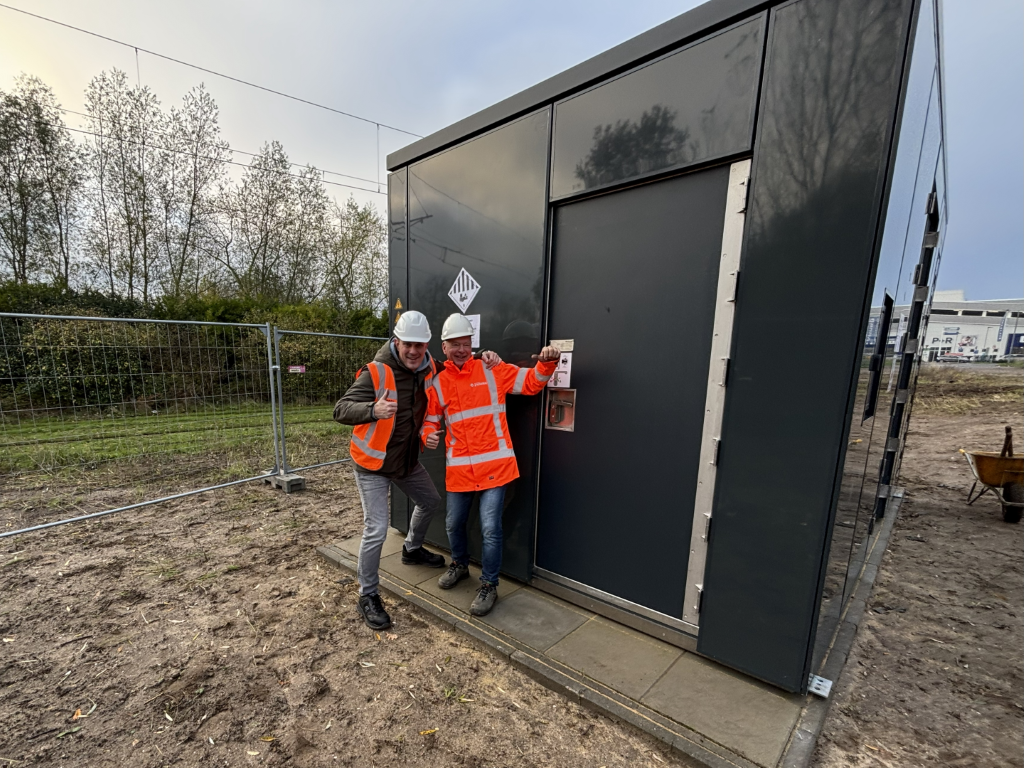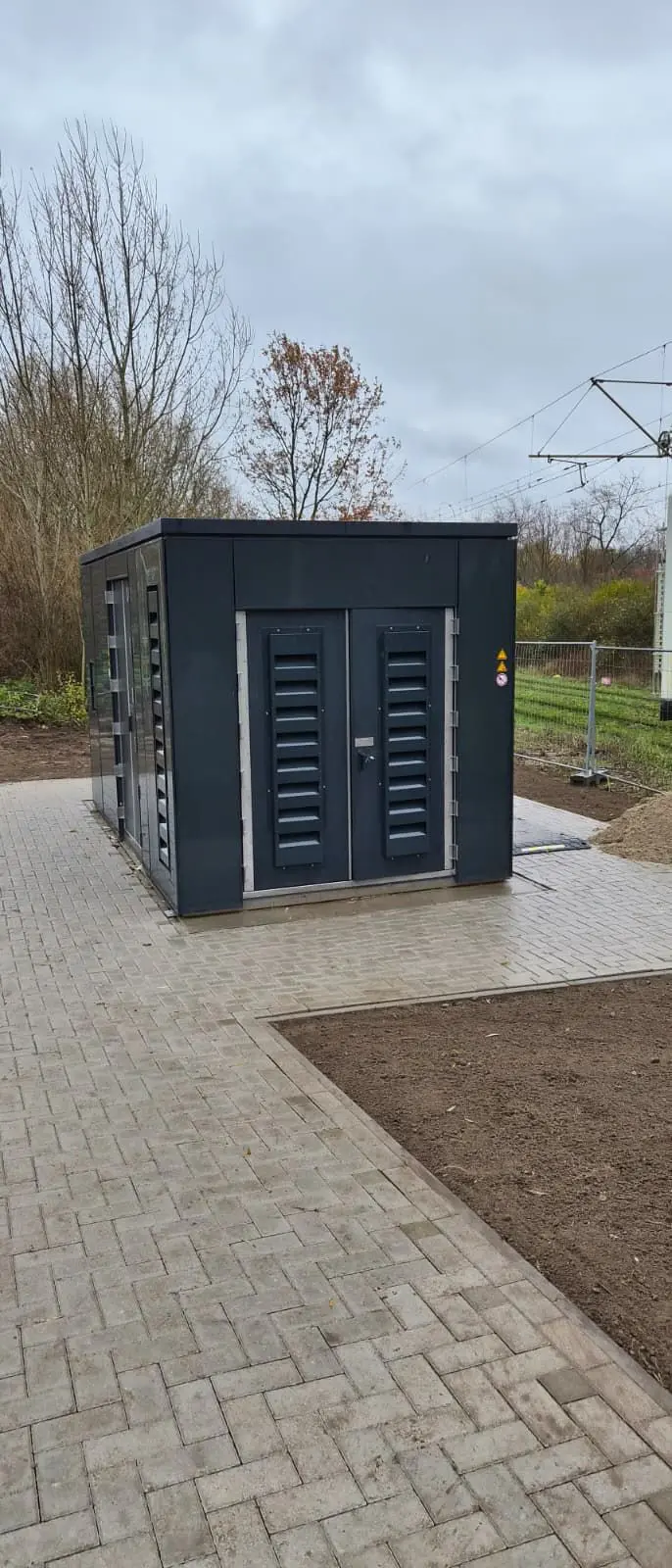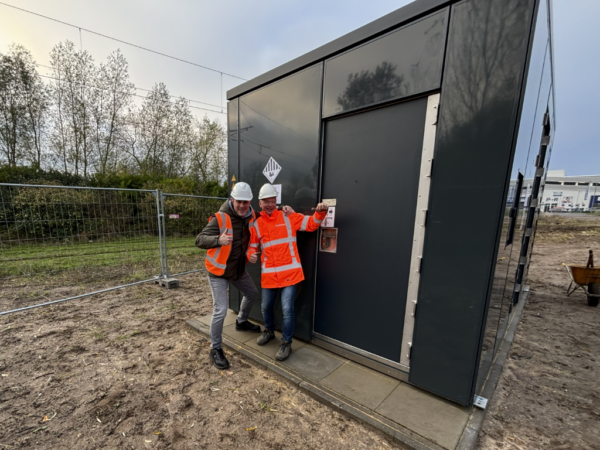
This is the second battery substation in the Netherlands. The first unit has been operating successfully for more than a year at the Veemstraat location in Rotterdam.
The battery substation supports the overhead line system by capturing braking energy generated by trams and releasing it again when trams accelerate. The first battery substation currently supports services between the De Kuip football stadion and Rotterdam city centre. The second unit will support tram services running from the football stadion towards the surrounding residential areas.
What is the Battery Substation?
The battery substation improves the reliability and quality of the traction power supply, enabling RET to operate more trams without requiring an additional connection to the electricity grid. As such, the energy bank also helps address grid congestion challenges.
The project was realised through close collaboration with RET and with support from Europe’s Rail Joint Undertaking as part of its innovation programme for sustainable and future-oriented rail infrastructure.
Plug-and-Play
The plug-and-play substation, as the public transport energy bank is also known, is a Strukton innovation developed entirely in-house. From engineering and converters to construction, installation and integration with the overhead line system, every aspect has been designed and delivered by Strukton.
The solution can be deployed flexibly, either as a permanent reinforcement of the energy supply or as a temporary power boost during diversions, special events or periods of increased demand. Simply connect it and put it into operation.
“Another important step towards a smarter and more stable energy system for public transport”
Further Information
The Battery Substation: Plug-and-Play Energy Supply for Ambitious Public Transport Operators.
The Strukton Public Transport Energy Bank provides a flexible and sustainable solution for improving traction power availability, making better use of recovered braking energy and supporting the transition to future-proof public transport networks.