





Emma Rotman
Manager Sustainability
Strukton
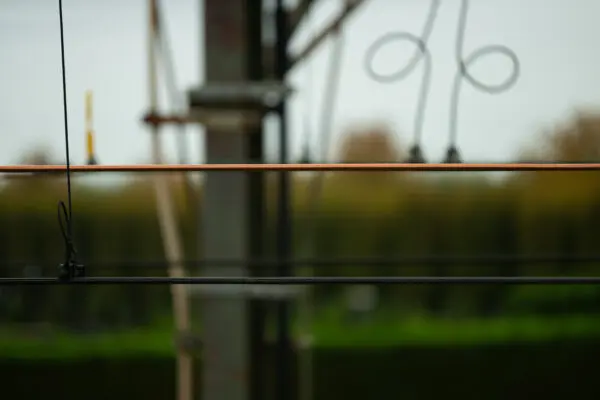
3 November 2026 – For the first time, old contact wire is returning to the Dutch rail network as new contact wire. Thanks to a collaboration between Strukton, Railtech, La Farga and Overdie Metals, the recycled contact wire is being installed today above the railway line near Driehuis. This marks another step towards making the Dutch rail network more sustainable. The circle is complete.
In 2025, Strukton became the first company in the world to install contact wire made from 100% recycled copper. Known as Genius, the contact wire was installed on the Zeeland railway line. This world first was made possible through a collaboration between ProRail, Strukton, Railtech and La Farga, a Spanish copper producer specialising in recycling. Now, that collaboration is going one step further. Copper recovered from old Dutch overhead lines is being recycled into new contact wire, returning it to where it came from.
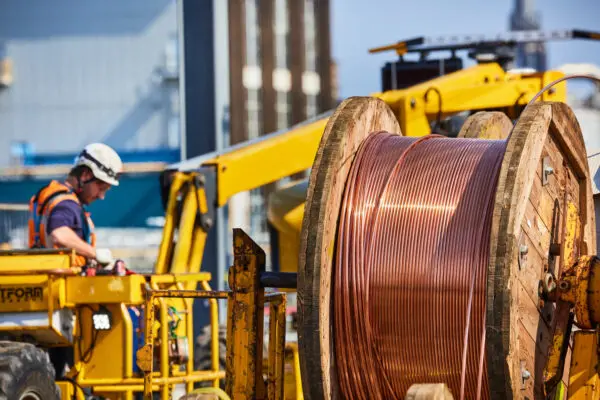
For this project, Strukton and Railtech collected 3.5 tonnes of old contact wire from previous railway projects. Railtech transferred the copper to Overdie Metals, where it was pre-processed to meet the requirements of manufacturer La Farga.
Using its patented recycling process, La Farga transformed the recovered copper into GENIUS, its 100% recycled copper solution, which was then used to produce new contact wire. The new wire complies with European standard EN 50149 and ProRail’s specifications.
And there is no compromise on performance: the recycled contact wire has the same mechanical and electrical properties as conventionally produced contact wire.
By reusing old contact wire, we avoid unnecessarily depleting the Earth’s resources to extract new copper. This project demonstrates urban mining in practice: copper remains in circulation within Europe, the value of existing raw materials is retained and dependence on primary raw materials is reduced.
Producing Genius contact wire from 100% recycled copper also results in 92% lower CO₂ emissions compared with contact wire made from newly mined copper. Compared with conventional production, it also uses 99% less water and 89% less fossil fuel. In addition, sulphur dioxide emissions are reduced by 99%.
Transport has also been organised sustainably: the copper was transported using an intermodal combination of road and rail, with electricity from renewable sources.
Manager Sustainability
Strukton
Sustainability in rail and civil engineering focuses on reducing environmental impact across the entire lifecycle of infrastructure. This includes using emission‑free equipment, circular and recycled materials, and designing assets with a longer lifespan and lower maintenance requirements. Reusing structural components—such as circular viaduct beams or recycled copper contact wires for overhead lines—significantly reduces CO₂ emissions while conserving valuable raw materials.
CO₂‑reduction is achieved through a combination of clean construction methods and material innovation. Key strategies include:
These measures not only reduce carbon emissions but help create more resilient, future‑proof infrastructure.
Infrastructure projects increasingly rely on advanced sustainable technologies, such as:
These innovations drive measurable environmental benefits throughout the asset lifecycle.
Zero‑emission equipment refers to machinery that operates without producing exhaust gases, typically powered by electricity or batteries. Examples include:
This equipment eliminates local emissions, improves air quality around work sites, reduces noise pollution and helps clients comply with increasingly strict sustainability requirements.
By 2050, the infrastructure sector aims to be fully climate‑neutral. This future includes:
The transition is already underway, driven by innovation, collaboration and long‑term thinking.
Railway construction in European urban areas faces several challenges, including limited space, strict environmental regulations and the need to manage noise and vibration in line with European rail standards. Complex public transport networks, high population density and the demand for uninterrupted urban mobility add further constraints.
The cost of constructing a new railway line in Europe depends on several key factors, including route length, local geography, environmental requirements and the complexity of the surrounding rail infrastructure. Prices can range from several million to hundreds of millions of euros, depending on whether the project involves urban environments, tunnels, bridges or upgrades to existing public transport networks.
Strukton delivers tailored railway engineering solutions and provides expert advice on cost optimisation through smart design, efficient project planning and sustainable construction techniques. By applying innovative technologies and meeting European rail standards, we help clients reduce lifecycle costs while ensuring reliable, future‑proof transport connections.