





Signalling and Telecom Works at Stockholm Central Station
News
09 February 2026
Read the article
Date
13 November 2018
Expertise
In order to reduce delays on this single track line, more locations were needed to enable the trains to pass. Trafikverket and Strukton Rail have built two new passing tracks to increase capacity.
One of the new passing tracks are located in Skabersjö between Oxie and Svedala; the other in Vilhelmsborg, east of Svarte. Work on the Skabersjö passing track began in late February 2017 and was completed in July. Construction in Vilhelmsborg was started at the end of May and was completed in late November.
Delays on a train often caused major consequential effects. About 80 trains per day are running on the Ystadbanan, which is a lot in comparison to many other single tracks.
“The five passing tracks already available were not enough for the increasing train traffic” Johan Månsson, project manager at Trafikverket
This also hindered train traffic on the connecting Österlen railway line towards Simrishamn. Only one train per hour runs from Ystad to Simrishamn; delays on the Ystadbanan have great impact on this line as well. The two extra passing tracks allows train traffic to finally run more smoothly on both lines and improves the railway connections to the South-East and West of Skåne.
The project was completed relatively fast using building process measurements. The project was well-defined in its entirety. The planning already began in autumn 2014 and was submitted for adoption in autumn 2015. The construction phase has also gone completely according to the calculations – at least in Skabersjö. Just after deployment in Vilhelmsborg there were a few signal problems that had not been detected before. The major issues were corrected already the same day.
“Thanks to the collaboration between an active contractor – Strukton Rail with manager Mikael Nilsson – that took the matter seriously, and Trafikverket’s own signal experts, the biggest problems were solved already on Sunday” Ossian Olsson, project engineer at Trafikverket
This news item was based on a publication by Trafikverket.
Railway construction in European urban areas faces several challenges, including limited space, strict environmental regulations and the need to manage noise and vibration in line with European rail standards. Complex public transport networks, high population density and the demand for uninterrupted urban mobility add further constraints.
The cost of constructing a new railway line in Europe depends on several key factors, including route length, local geography, environmental requirements and the complexity of the surrounding rail infrastructure. Prices can range from several million to hundreds of millions of euros, depending on whether the project involves urban environments, tunnels, bridges or upgrades to existing public transport networks.
Strukton delivers tailored railway engineering solutions and provides expert advice on cost optimisation through smart design, efficient project planning and sustainable construction techniques. By applying innovative technologies and meeting European rail standards, we help clients reduce lifecycle costs while ensuring reliable, future‑proof transport connections.
The duration of a railway construction project in Europe varies widely, depending on the project’s scale, location and the complexity of the surrounding rail infrastructure. Smaller upgrades or maintenance works may take only a few months, while major infrastructure projects — such as new rail lines, station upgrades or urban mobility improvements — can take several years to deliver due to engineering challenges, environmental requirements and European rail standards.
Strukton ensures efficient project delivery through precise planning, integrated railway engineering and smart construction methods. By coordinating with local transport authorities and applying techniques that minimise disruption for passengers and communities, we help keep Europe’s rail networks reliable, accessible and future‑ready throughout the entire construction process.
Safety is a top priority in all railway construction projects across Europe. Construction teams must comply with strict rail safety standards, European regulations and national guidelines to ensure a safe worksite and a reliable rail infrastructure. Measures typically include the use of personal protective equipment, designated worksite barriers, controlled access zones and continuous digital safety monitoring to reduce risks around active rail lines.
At Strukton, safety is embedded in our railway engineering expertise. We apply advanced monitoring technologies, rigorous training programmes and proactive risk management to safeguard our people, our partners and the travelling public. By integrating safety into every phase of a project, we help deliver secure, future‑proof rail infrastructure throughout Europe.
Railway construction involves building new rail lines, stations and other assets that expand or upgrade Europe’s rail infrastructure. This includes activities such as track installation, civil engineering works, signalling systems and the development of new corridors to support sustainable transport and growing mobility needs across European rail networks.
Railway maintenance, on the other hand, focuses on keeping existing infrastructure safe, reliable and efficient. This includes inspections, repairs, asset renewals and preventative maintenance to ensure smooth operations and compliance with European safety and performance standards.
Strukton provides both railway construction and rail maintenance services, combining advanced engineering, digital monitoring technologies and lifecycle‑based asset management. This integrated approach helps keep rail networks across Europe in optimal condition while supporting future‑proof mobility solutions.
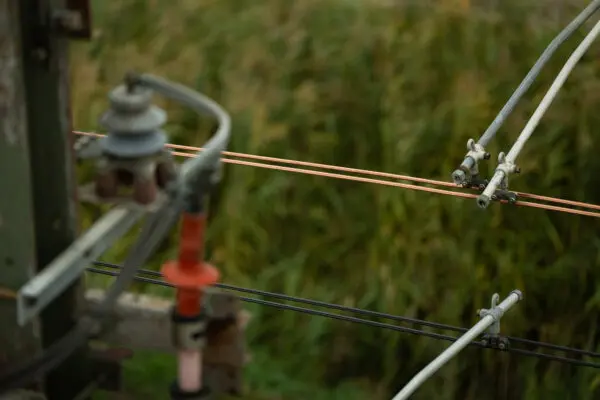
Modern railway construction in Europe relies on high‑performance and durable materials that meet strict European rail standards for safety, sustainability and long‑term performance. Typical components include high‑grade steel rails, reinforced concrete sleepers, copper contact wires for overhead line systems and high‑quality, sustainably sourced ballast for track stability.
To support Europe’s shift towards sustainable and circular rail infrastructure, Strukton prioritises low‑maintenance, recyclable and long‑life materials. By applying circular construction principles and selecting components that minimise material consumption and maintenance needs, we help extend the lifespan of railway assets and reduce the environmental footprint of rail infrastructure projects across Europe.
In rail construction, highly specialised machinery ensures that work is carried out safely, efficiently and with minimal disruption. Typical equipment includes track‑laying trains, tamping machines, rail welding units, road‑rail excavators and ballast profiling systems, each designed to build or restore track structures with precision. These machines support both large‑scale track installation and daily maintenance operations. Innovations in automation and robotics are increasingly enhancing productivity and safety, helping infrastructure managers deliver consistent quality in a growing European rail network.