




Ben van Schijndel
Ben will be happy to tell you all about ERTMS
Strukton Rail
Date
01 September 2022
Expertise
Commissioned by railway operator Banedanmark, the Thales-Strukton Rail consortium recently completed the fourth installation of the ERTMS train safety management system on the Danish railway network. Passengers between Herning – Skanderborg/Struer – Herning, and between Herning – Vejle will now benefit from this European standard for train safety and management.
Thanks to the European Rail Traffic Management System (ERTMS), trains in Jutland will now be able to travel faster and more safely. According to Paul de Haas, member of the Executive Board of the Thales-Strukton joint venture, this fourth migration from the obsolete, analogue train safety management system to the modern, digital ERTMS was the most complex to date.
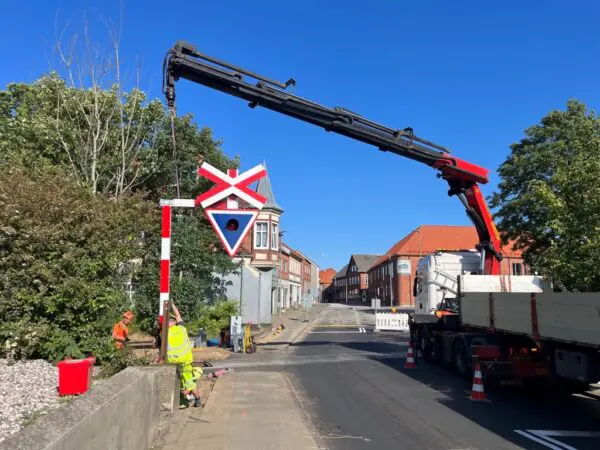
“Over the summer, we switched the entire line from the old system to the new one in six phases. That’s 188 kilometres of single track, 23 stations, 88 level crossings, 92 switch machines, 472 axle counters, 421 marker boards and 783 balises. This roll-out marks another important milestone.” Paul de Haas, member of the Executive Board of the Thales-Strukton joint venture
The project is becoming more complex as ERTMS is installed on more lines. The lines are getting longer and we have to connect them together.
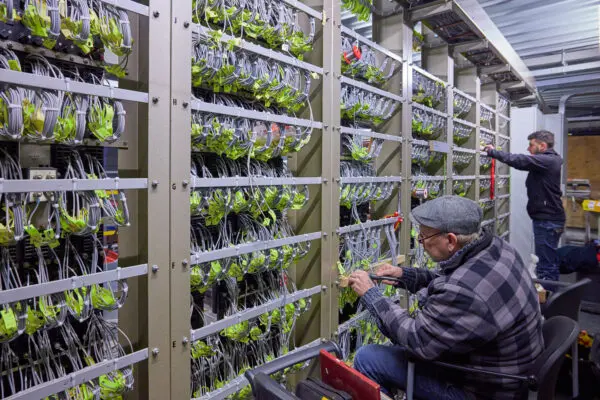
The train safety management system on the Fjernbane is outdated, and the Danish government decided ten years ago to install ERTMS on the entire track. The project comprises the complete system engineering process, including a design phase, a pilot and the roll-out per line. Once installation is complete, the system will be maintained for 25 years. Thales is supplying the software and the management system and Strukton Rail the power supply systems, the cabling, the civil designs and the complete installation. On those lines where ERTMS has already been installed, the Danish railway operator has reported that trains are running with a very high level of punctuality. ERTMS is less vulnerable because there are fewer components in the track, which means fewer signalling errors and more stability.
“In Denmark we started completely from scratch, and we are demonstrating how our integrated approach enables us to deliver a turnkey ERTMS project from design to installation. We are putting our expertise into practice in a very challenging and safety-critical project, and we are currently preparing the fifth ERTMS migration in Jutland. The bonus is that we have a branch office there and we know how things work in Denmark.” aul de Haas, member of the Executive Board of the Thales-Strukton joint venture
By 2029, ERTMS must have been installed on all lines of Denmark’s western rail network.
In order to facilitate European train traffic, ERTMS will become the standard throughout Europe. This means that the Dutch railway network will also be equipped with ERTMS.
“As a consortium, we are gaining a lot of experience in this area. The design is complete, we know the ins and outs of the installation and migration process, we handle the contract management and we’ve learned what works and what doesn’t. We will draw on all this knowledge when installing ERTMS in the Netherlands and in Strukton Rail’s other home countries (such as Sweden and Italy). We know we can rely on our own strengths.”
Strukton provides the experience, independence, and innovative power needed to make this transition faster, safer, and more efficient.
Ben will be happy to tell you all about ERTMS
Strukton Rail
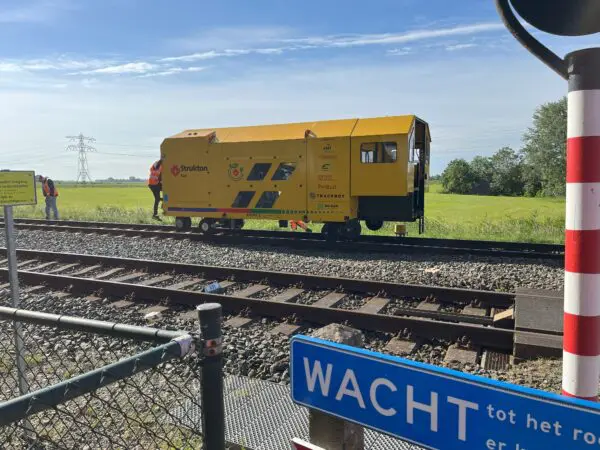
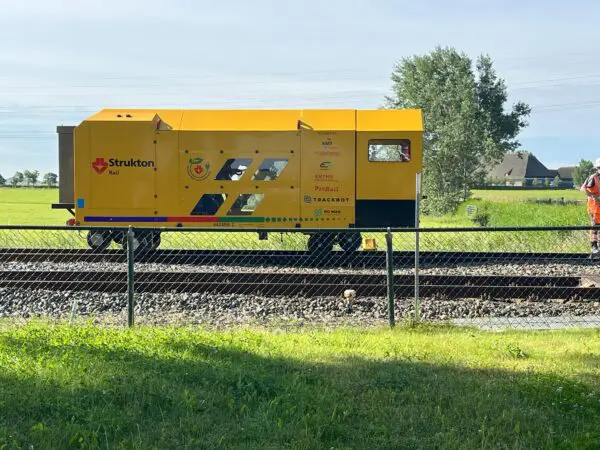
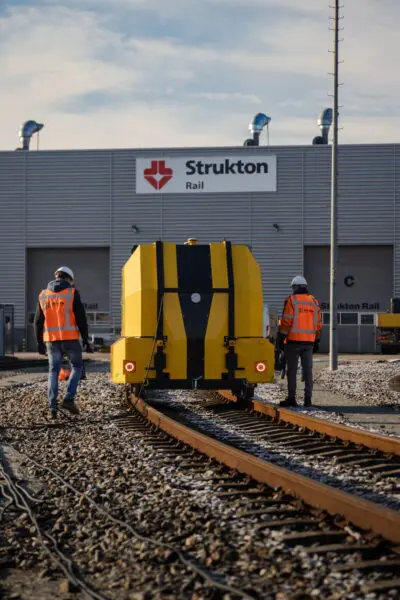
The ERTMS Trackbot is Strukton’s robotic solution designed to mount balises and axle counters efficiently and safely on sleepers and rails—components essential for ETCS operation. With tens of thousands of balises and over twenty thousand axle counters required for ERTMS rollout in the Netherlands alone, the Trackbot automates this repetitive, physically demanding work and helps speed up deployment.
Train protection refers to the systems and processes that ensure trains operate safely. The systems detect train locations, manage movement authorities and intervene automatically—typically by applying the brakes—if a train exceeds safe speed limits or passes a signal at danger. Train protection therefore prevents collisions, derailments and other hazardous situations.
The Netherlands primarily uses Automatische Treinbeïnvloeding (ATB), a national automatic train control system developed to enforce speed limits and intervene when drivers fail to respond to signals. ATB monitors speed and automatically applies the brakes when required. The Netherlands is also transitioning to ERTMS, Europe’s digital signalling and train control standard that will gradually replace older systems to improve safety, capacity and interoperability.
Strukton has extensive expertise in designing, installing and integrating ERTMS on major European corridors. Our experience includes deployments on the Betuweroute and the Amsterdam–Utrecht line, as well as a large‑scale ERTMS programme in Denmark. We are also rolling out ERTMS in the Dutch province of Friesland and on the Rotterdam–Belgian border route. Our in‑house innovations help accelerate implementation and support Europe’s transition to a fully interoperable rail network.
The European Rail Traffic Management System (ERTMS) is Europe’s standardised digital signalling and automatic train protection system. It uses ETCS cab signalling to provide real‑time speed and movement information directly to the driver, supported by GSM‑R radio communication. ERTMS increases rail capacity, enhances safety and enables seamless cross‑border operations, making it central to the modernisation of Europe’s railway network