





Signalling and Telecom Works at Stockholm Central Station
News
09 February 2026

Read the article
Date
14 January 2022
Expertises
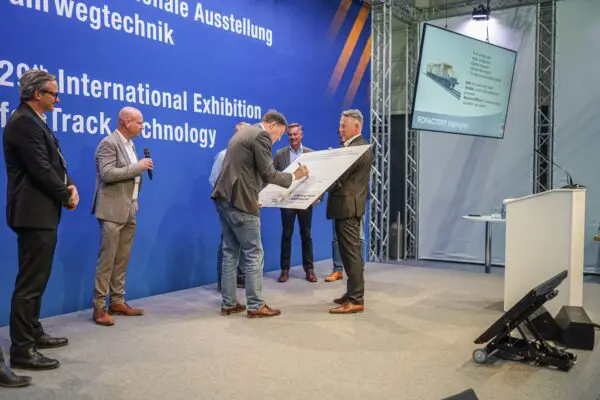
This week, our colleagues in Sweden signed the first rail contract for the extension of the new metro line in Stockholm. We were awarded the contract, mentioned FUT 4743 Akalla-Barkarby contract in procurement language, in competition with nine other tenderers after an evaluation of both price and quality.
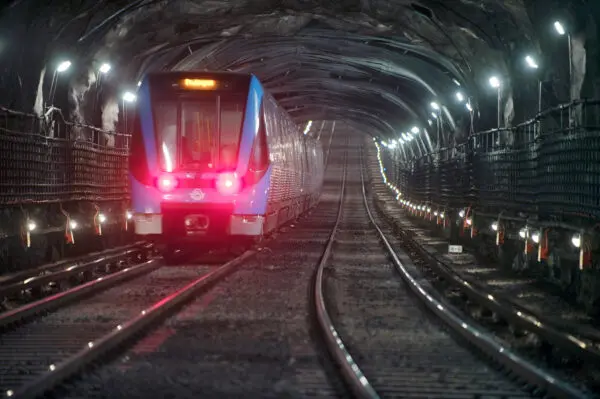
The contract involves the construction of approximately four kilometres of double-track expansion, where we are responsible for the track, groundwork, busbar, 400 V electricity and more. The work will take place in the tunnel that is now in being built between the existing station Akalla and the future station that also is being built under Barkarby commuter rail station. Another station, Barkarbystaden, will be built in the middle of the stretch. This new station is situated in an area that is estimated to have about 50,000 inhabitants by 2035.
“It is historic to be the first to build a new metro line in Stockholm, something that has not happened in about 30 years. We are especially excited because Strukton Rail is a company that lives and breathes subway through our large maintenance contract for the subway that we have had since 2012.” Johan Oscarsson, Strukton Rail Sweden's CEO
Planning for the project starts immediately. A lot of actors and stakeholders will be on site at the same time and the space is limited in this underground project. This places great demands on logistics and cooperation. The physical implementation of the work is expected to begin in the autumn of 2023 and the contract in its entirety will be completed in 2025.
“Believe it or not, we are really eager to be ‘going underground again’. In 2018, we completed our major project of building the railway system for Citybanan under Stockholm. Underground projects provide an extra dimension that is both challenging and fun.” Christoffer Kednert, District Manager for Project East
Tunnel construction requires a combination of civil engineering, advanced technical installations, and specialised project management. Modern tunnel projects integrate structural works with safety systems, ventilation, lighting, drainage, and control technology to ensure long‑term reliability. Contractors with rail and civil expertise deliver both road tunnels and rail tunnels, merging construction with lifecycle‑oriented asset management.
Tunnel and underpass construction brings together many disciplines: structural engineering, geotechnics, MEP systems, safety installations, rail systems, cabling, telecom, power supply and monitoring. Successful delivery requires end‑to‑end coordination, often managed by organisations that combine in‑house specialists with trusted long‑term partners across the value chain. This integrated approach ensures seamless execution in complex environments and supports long‑term operability.
Tunnels depend on a broad suite of tunnel technical installations, including fire‑safety systems, ventilation, lighting, signalling, traffic control, emergency communications and structural monitoring. These systems must be designed, installed and maintained according to strict safety and performance standards. Regular inspections and data‑driven maintenance are essential for keeping these installations reliable throughout the tunnel’s lifecycle.
Tunnel maintenance includes routine inspections, cleaning, functional checks of technical systems, and structural assessments. Rail‑sector standards classify tunnels by geometry, lining material and condition, and require periodic and extraordinary inspections to assess structural integrity and safety risks. Asset‑management‑driven maintenance ensures tunnels remain safe, available and fit for increasing traffic volumes over decades.
Railway tunnels must meet additional requirements such as accommodating overhead lines, track systems, power supply, signalling, emergency walkways, drainage and smoke‑control measures. They also require precise track geometry and maintenance methods suited for high‑speed or heavy‑rail operation. Leading European firms specialise in design, construction and renewal of railway tunnels, ensuring safe integration with the broader rail network.
In both rail and road environments, work often takes place under live conditions. This requires detailed staging, temporary diversions, night or weekend possessions, and precise coordination of civil works, MEP systems and tunnel‑technical installations. Rail organisations in the Netherlands, Scandinavia and Italy routinely work in active networks, applying strict safety regimes and disciplined planning to minimise disruption.
Underpasses require robust structural design to manage soil loads, groundwater pressure and proximity to rail or road traffic. Typical works include cut‑and‑cover construction, pre‑fabricated elements, foundation works, waterproofing, drainage and integration with surface infrastructure. Engineering teams also coordinate utilities, telecoms and mobility interfaces to ensure safe and efficient movement above and below ground.