




Construction partner for pioneering SAF plant DSL‑01 by SkyNRG and Technip Energies
News
19 February 2026
Read the article
Date
23 December 2021
Expertises
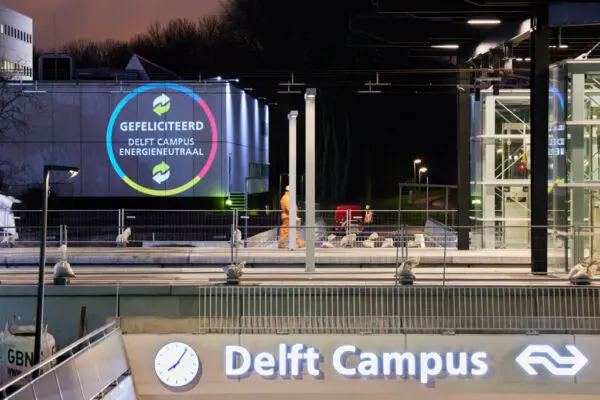
Congratulations, Delft, with Delft Campus station, the first energy-neutral railway station of the Netherlands! The totally renewed station was officially opened on Monday 20th December. We are proud, together with the other parties involved, to contribute to this sustainable new step. The station roof generates all energy needed by the station the year round. Delft Campus paves the way for the sustainable approach of stations in the Netherlands that will be provided with a roof.
The station also has a new entrance and counts two new platforms, and four elevators that make the station better accessible. A new tunnel for cyclists and pedestrians makes it easier to access Delft University.
ProRail expects a huge growth of passengers at Delft Campus station in the years to come. Four trains per hour in each direction pass the station at the moment. This may increase to six trains an hour in 2025. This stimulates sustainable transport between the cities of Leiden and Dordrecht and fits the sustainability ambitions of both Dutch Railways and ProRail.
“It is fantastic to see that we have been able to deliver what we promised at the end of 2018. This makes me proud.” Ben Steehouwer, Project Manager at Strukton
What makes the roof of Delft Campus station so special is that the roof itself consists of solar panels. This construction is highly different from laying panels on a roof. The 810 panels have been completely optimised for generating energy. The energy yield will be 200 megawatt per year on average, which is equal to the use of 70 households per year. This is more than enough to compensate the annual energy consumption of the station systems such as elevators, led lighting, public address system, passenger information, ticket checks, etc.
We were responsible for the construction of the roof, including solar panels and the connection to the power grid. In the design and construction of the station, we have taken future developments into account, such as delivering electricity back to ProRail’s own network or local storage of electricity. The cable pipes under the track bedding are available!
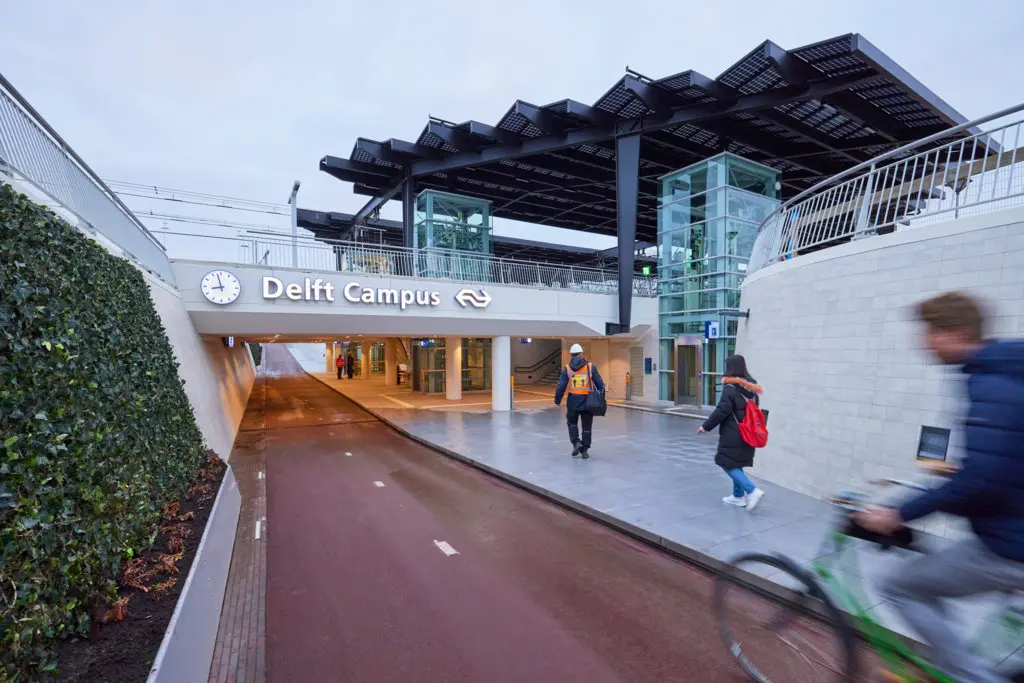
Cyclists have a good view on the solar roof
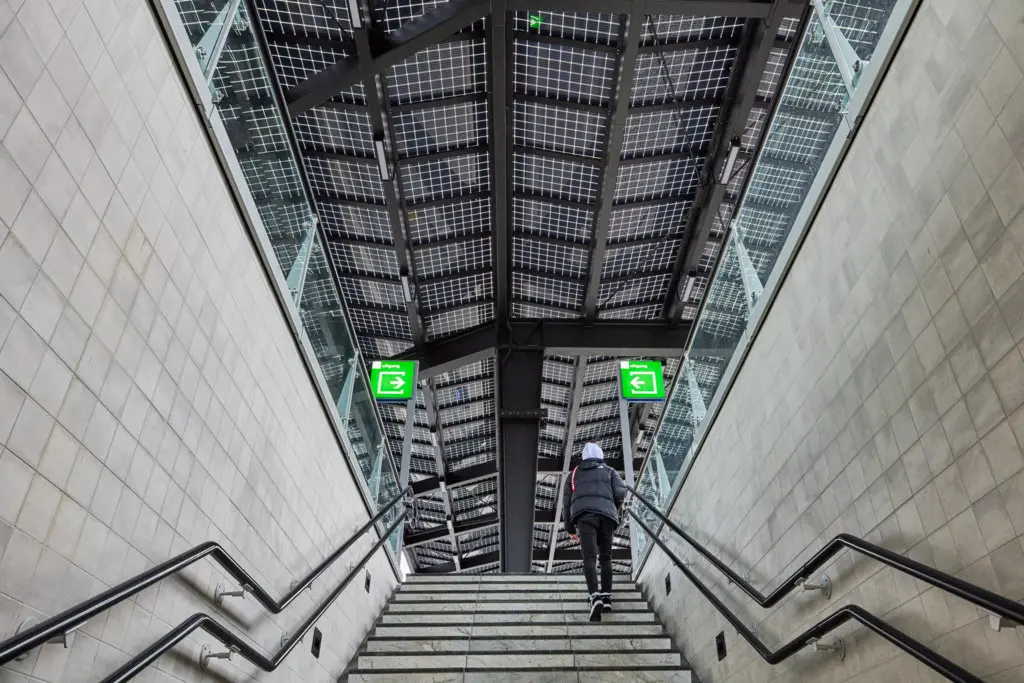
When climbing the stairs you directly see the impressive solar roof
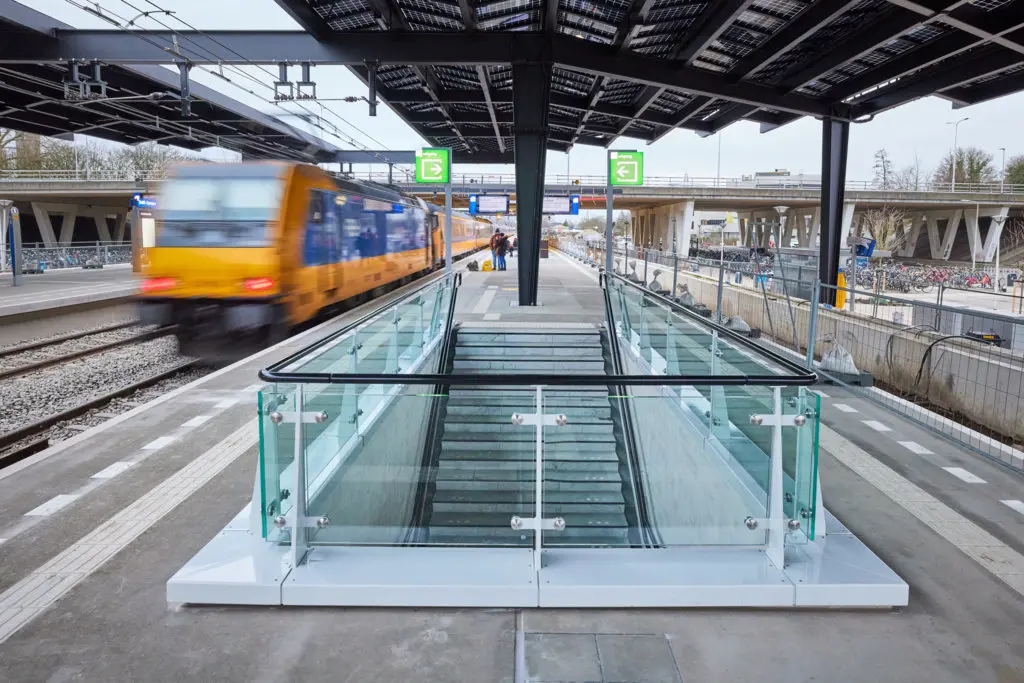
Two brand-new platforms
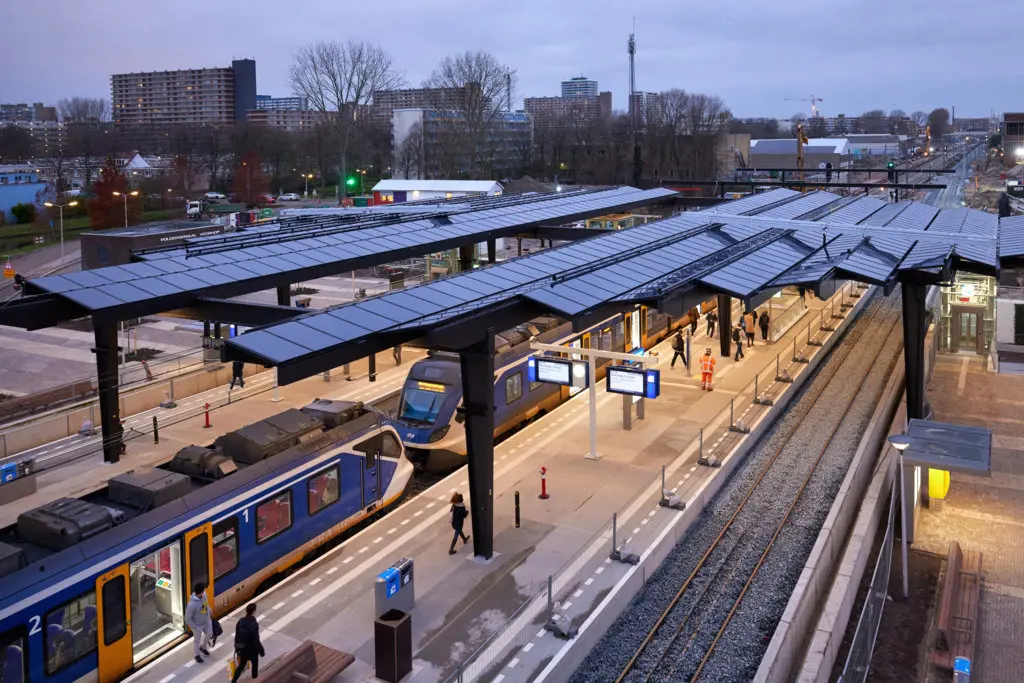
Solar roofs protect passangers from rain
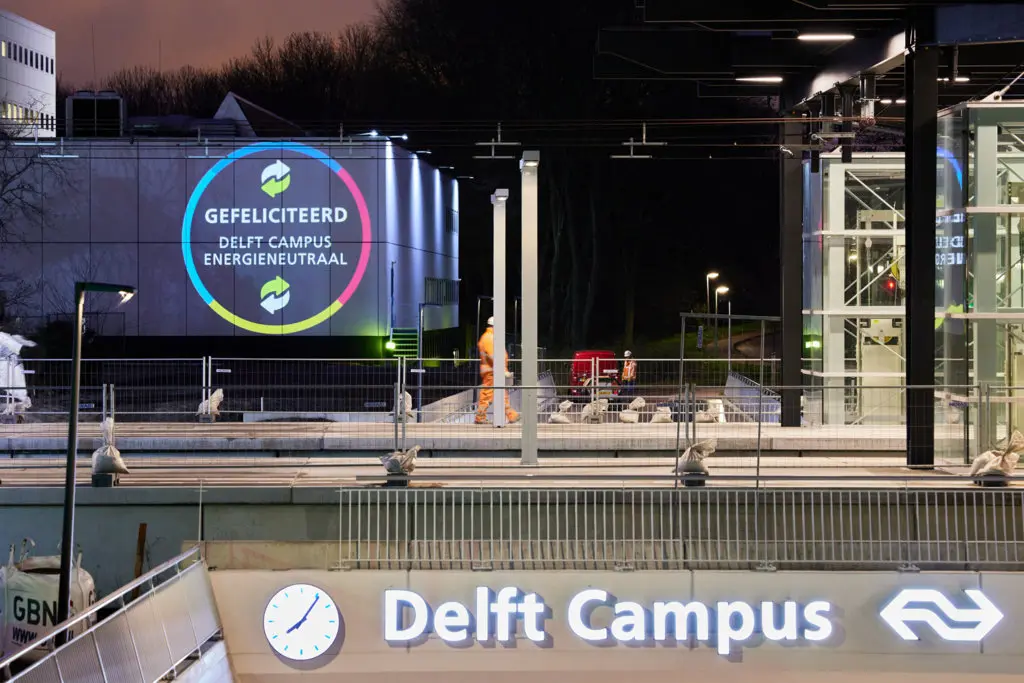
Congrats Delft with this iconic station!
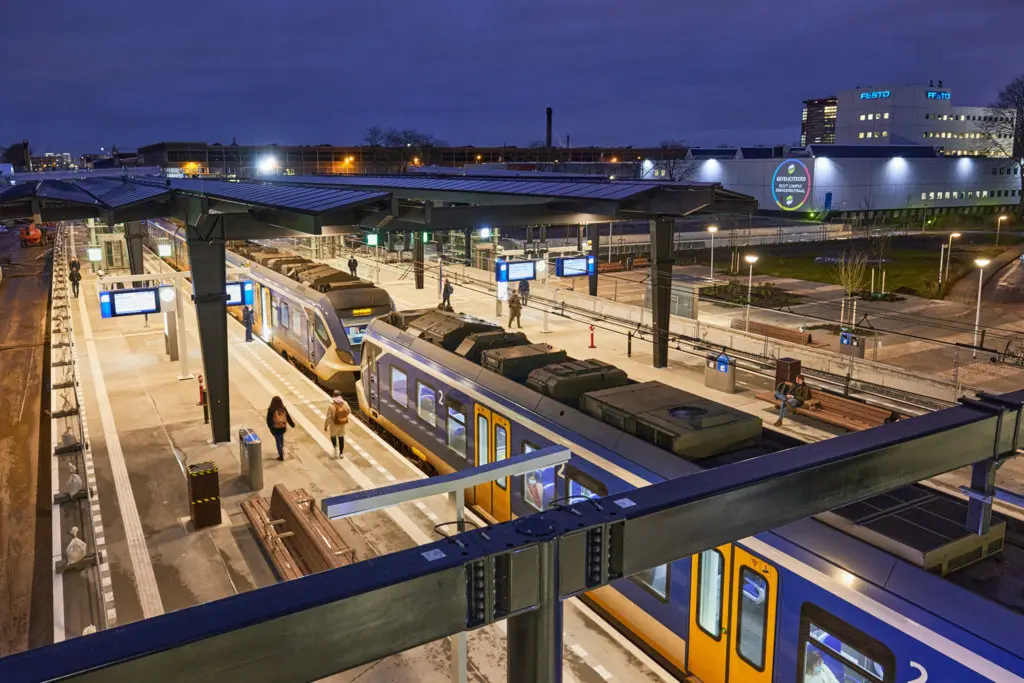
A nice view on the station, roofs and platforms
The project is part of the High-Frequency Rail Transport Programme Rijswijk-Rotterdam. We are doubling the tracks between Rijswijk and Delft Campus anticipating the passenger growth. The network will allow for higher train frequencies.
Stations function as multimodal mobility hubs, where pedestrians, cyclists, buses, trams, taxis, trains and commercial activities converge. This density of movements requires careful planning, integrated construction phasing and coordination across many disciplines to maintain safety and accessibility. Station projects often involve platform reconstruction, track works, switches, overhead lines, underground structures, commercial areas and public‑space upgrades all at once
Working in a live station environment requires holistic and precisely synchronised planning. Multidisciplinary teams coordinate construction windows, material deliveries, rail possessions and stakeholder activities to minimise disruption to passengers and train services. This approach is used widely in complex rail environments across Europe, where rail contractors must maintain availability while executing renewal and upgrade works
Station upgrades typically combine civil engineering, rail systems, structural works, cable and pipeline installation, telecom systems, travel‑information systems, platform construction, underpasses and bicycle parking. Integrating these disciplines under one coordinated framework reduces delays, prevents spatial conflicts and improves safety. Rail infrastructure specialists with Short Line, Rail‑Civil and engineering units routinely apply this integrated method in complex environments.
Advanced tools like BIM, 3D reality models, digital asset mapping and rail‑data systems support accurate planning, clash detection and risk reduction. These technologies allow teams to simulate construction stages, coordinate disciplines, and maintain rail operations more effectively. European rail organisations increasingly use digital models to ensure safe, sustainable and predictable delivery of infrastructure upgrades.
Sustainable station construction uses circular and recycled materials, optimised soil management and energy‑efficient construction methods. Rail organisations like Strukton also invest in low‑emission equipment, recycled contact wires, and sustainable construction logistics to reduce their carbon footprint. Many civil and rail contractors apply environmental management procedures to lower noise, emissions and waste during work in dense urban stations.
Sustainability in rail and civil engineering focuses on reducing environmental impact across the entire lifecycle of infrastructure. This includes using emission‑free equipment, circular and recycled materials, and designing assets with a longer lifespan and lower maintenance requirements. Reusing structural components—such as circular viaduct beams or recycled copper contact wires for overhead lines—significantly reduces CO₂ emissions while conserving valuable raw materials.
CO₂‑reduction is achieved through a combination of clean construction methods and material innovation. Key strategies include:
These measures not only reduce carbon emissions but help create more resilient, future‑proof infrastructure.