





Contract for Gerstaberg Switching Station
News
13 August 2025

Read the article
Date
06 October 2021
Expertises
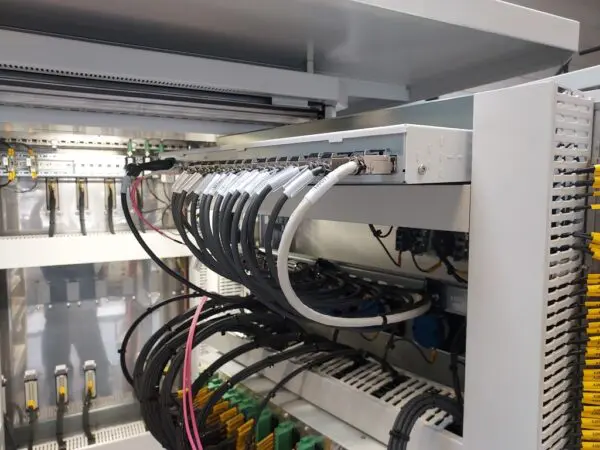
TenneT recently awarded Strukton Systems the contract for a pilot with E-POSS monitoring and WIKA SF6 sensors at the power stations in the Dutch cities of Alphen and Raalte. The aim of the pilot is to gain experience with capturing data using E-POSS monitoring.
The WIKA sensors measure the SF6 gas pressure, and the temperature, density and dew point.
In recent years, TenneT investigated the causes of error indications. One of the causes was alleged SF6 leakage at power switches. Sunlight caused pressure fluctuations, which led to unjust failure reports. By measuring a variety of parameters, TenneT will get better insight into the actual status of the power switches.
The data is first stored at the station as a Comtrade file, and will then be transferred to a central asset management database in the form of a data lake. TenneT will use the pilot to gain experience with capturing and interpreting maintenance data. They wish to use the data to plan preventive maintenance rather than having to go to the station for each failure. This will lead to a more reliable net and lower maintenance costs in the end.
Strukton already uses the E-POSS monitoring system for several applications at the TenneT stations in Rijssen, Alphen, Raalte and Terwinselen. The system is used for monitoring the motor currents of separators and earthing switches and the currents of coils of power switches. E-POSS is particularly suitable for capturing huge amounts of data. Using smart algorithms, various kinds of failures can be distinguished, leading to better insight into the maintenance need.
POSS is an easily deployable tool for monitoring assets. It translates condition data into valuable information using smart algorithms.
Sustainable asset management balances performance, cost efficiency and environmental impact across the entire lifecycle of infrastructure. It focuses on extending asset life, minimising failures and reducing CO₂ emissions through smarter maintenance planning and responsible material use. Modern approaches increasingly integrate predictive maintenance and sustainability goals to improve long‑term resilience. The POSS monitoring system and Eurailscout’s inspection trains are examples that boost sustainable asset management.
Data is the foundation of smart maintenance. By collecting condition data from inspections, sensors and monitoring systems, infrastructure managers gain accurate insight into the health of their assets. When combined with analytics, software and AI, this data enables predictive maintenance frameworks that reduce downtime, improve reliability and support informed, long‑term decision‑making.
Predictive maintenance helps prevent unexpected failures, avoids costly emergency repairs and keeps infrastructure available at the lowest operational impact. By identifying deviations at an early stage, repairs can be scheduled during planned maintenance windows—often at night—reducing disruptions and improving asset performance. Studies show predictive models significantly reduce unplanned outages and improve safety across transport networks.
Data‑driven asset management provides an understanding of the condition and remaining lifespan of existing structures and assets. This insight enables infrastructure owners to plan renovations and renewals more efficiently, allocate investments wisely and reduce environmental impact by avoiding premature replacement. Advanced asset analytics help organisations make smart decisions and prioritise upgrades where they deliver the most value.
Asset management applies to rail infrastructure, roads, tunnels, waterways and all other civil structures where safety, availability and sustainability are essential. Whether managing complex rail networks or urban mobility systems, modern asset management frameworks—often supported by AI and predictive analytics—strengthen performance and ensure future‑proof infrastructure across Europe.
Expanding the electricity grid is crucial to support increasing demand from renewable energy, electric mobility, gas‑free homes and growing data‑center capacity. A larger and stronger grid ensures reliability, prevents congestion and enables the seamless integration of solar, wind and other sustainable energy sources.
Modern energy networks rely on extensive civil engineering works, including the construction of high‑voltage substations, transmission‑line foundations, access roads, cable routes and site preparation for electrical stations. These works form the physical backbone that allows grid operators to expand capacity safely and efficiently.