



To main content To navigation

Construction partner for pioneering SAF plant DSL‑01 by SkyNRG and Technip Energies

View all Articles

Date

19 February 2026

Owner

Strukton

Expertises

Industry, Sustainability

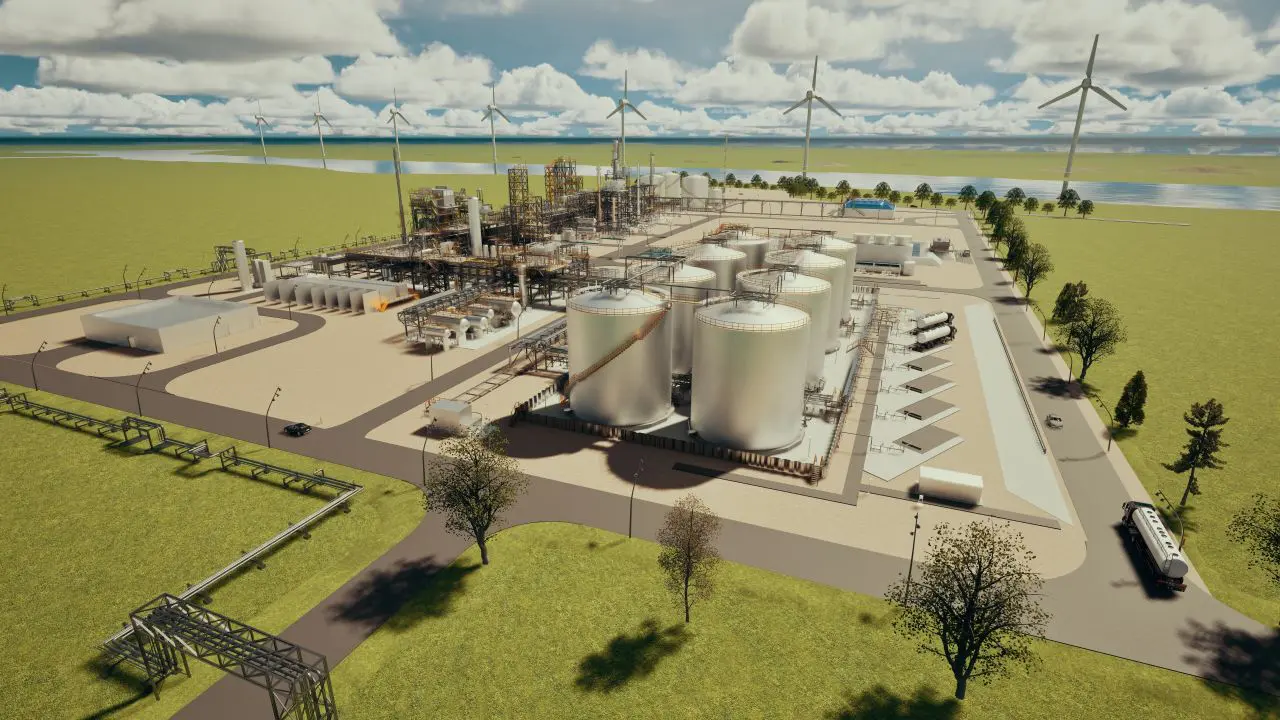
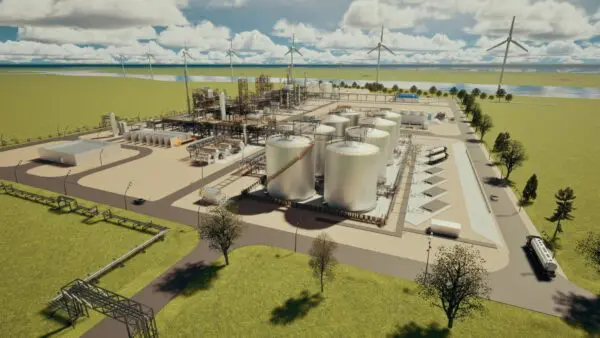
Strukton has been appointed by Technip Energies as the civil and structural construction partner for DSL‑01, a groundbreaking Sustainable Aviation Fuel (SAF) production facility currently under development for SkyNRG in Delfzijl, the Netherlands. The project marks one of the world’s first SAF plants of its kind and represents a major step forward in scaling the production of renewable aviation fuels.

First milestone

Located at the Oosterhorn industrial site, the greenfield plant will include a Direct Supply Line (DSL) installation that converts regional waste and residual streams into high-quality SAF and other renewable products. KLM will be the primary off‑taker once the plant is operational, reflecting the airline’s long-term commitment to the development and adoption of sustainable fuels.

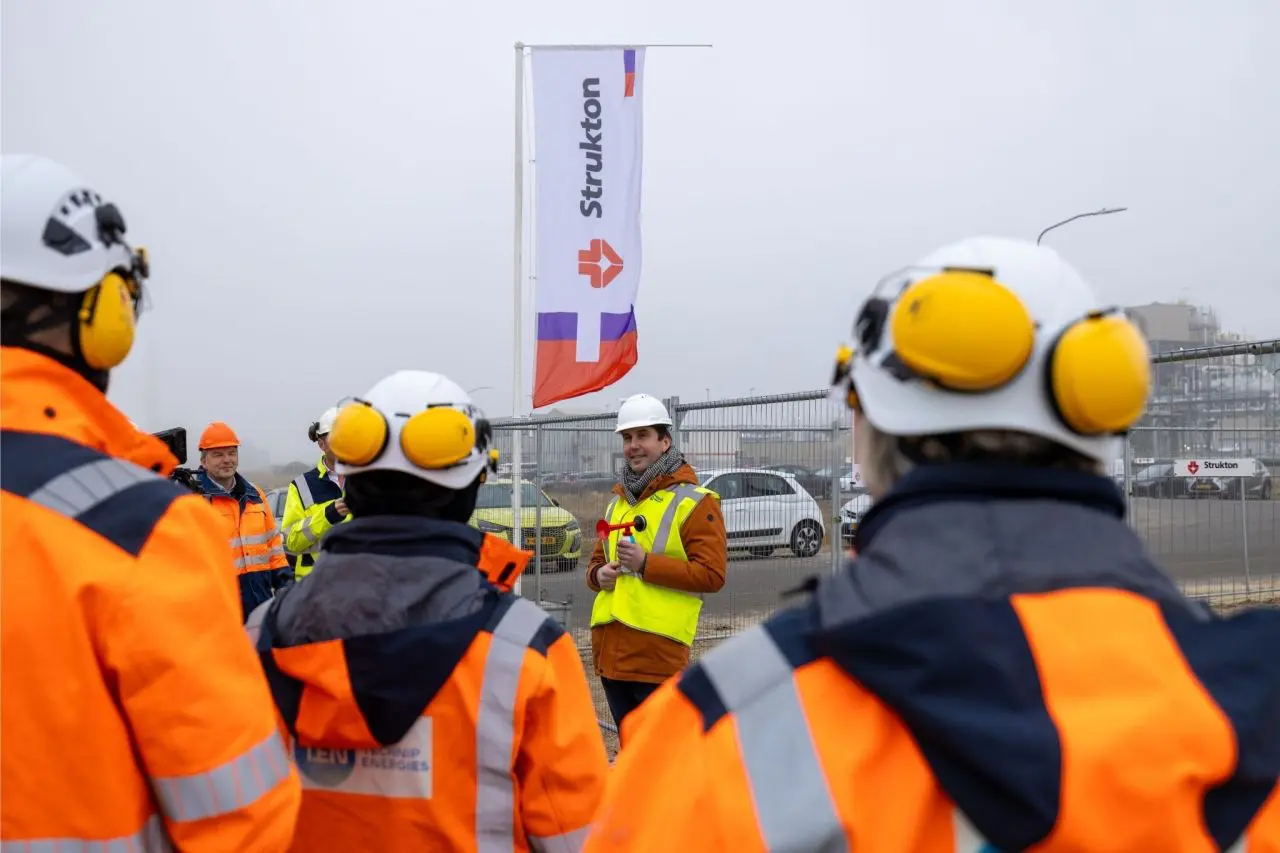
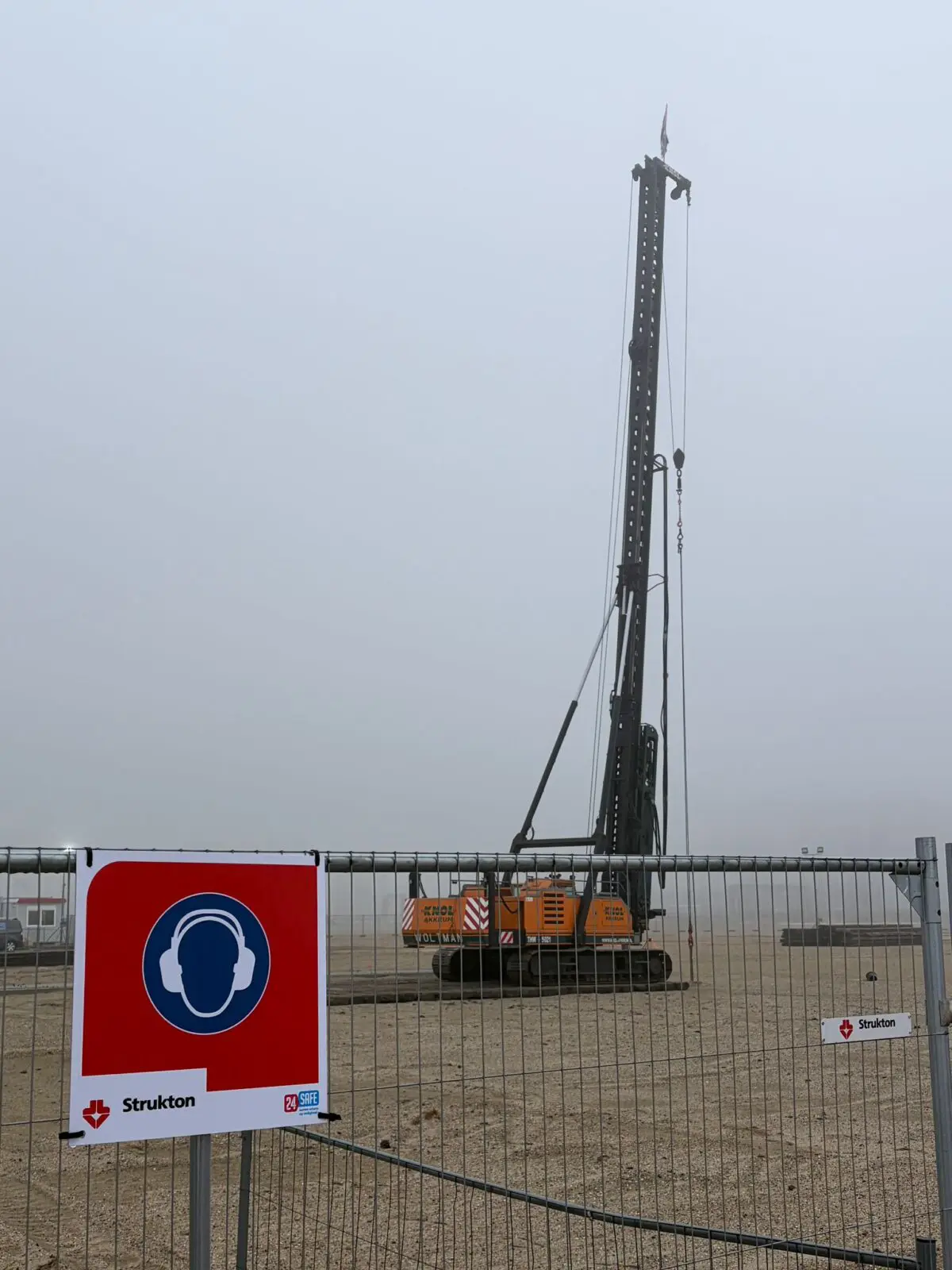
With all permits issued and financing officially completed, the project has now moved from development into full construction. On 9 February, the first pile was driven—an important milestone signalling the start of on‑site works. DSL‑01 is the first commercial‑scale SAF plant worldwide to secure non‑recourse project financing, demonstrating strong market confidence in the scalability of SAF production.

Strukton’s scope of work

As construction partner, Strukton is responsible for delivering civil and building works, including:

  • Full site preparation and temporary works
  • Installation of underground infrastructure
  • Pile driving and foundation works
  • Construction of four new buildings
  • Final site finishing and landscaping

A plant designed for substantial CO₂ reduction

Once operational, DSL‑01 is expected to produce 100,000 tonnes of SAF and 35,000 tonnes of renewable by‑products annually. The production process enables an estimated 80% reduction in lifecycle emissions compared with fossil kerosene, increasing to over 90% through maximum electrification and minimal natural gas use

Looking ahead

Construction is now underway, with commissioning and start‑up scheduled for mid‑2028. The facility will support SkyNRG, KLM and other industry partners in meeting their sustainability objectives and complying with European renewable fuel mandates.

Frequently asked questions

Find answers to frequently asked questions here.

Why is reliable infrastructure essential for industrial sites?

Industrial environments rely on uninterrupted processes, making continuity, safety and quality the core requirements for all supporting infrastructure. Complex sites such as chemical parks operate 24/7, and even minor disruptions in drainage, foundations, pipelines or internal transport routes can halt production and create major safety risks. Reliable infrastructure — from sewer systems and foundations to drainage and utility lines — ensures smooth operations under demanding conditions.

What types of civil and structural works are required for industrial facilities?

Industrial facilities often need heavy‑duty civil engineering, including large‑diameter sewer systems, earthworks, paving for factories, concrete and steel structures, and pile foundations. These tasks must be completed with extreme precision and compliance, especially when working around contaminated soil, active installations or limited working space. Long‑term industrial locations such as Chemelot depend on high‑quality engineering during construction, renovation and maintenance phases. [struktonwe…enbeton.nl], [chemelot.nl]

How can innovative techniques minimise downtime during industrial construction or maintenance?

Industrial sites benefit from solutions that reduce disruption to ongoing processes. Techniques such as Concrete Canvas, liquid‑tight containment upgrades, cooling‑tower renovations, trench sealing and plastic‑lined pit repairs enable rapid installation while keeping production active. In complex conditions — including outdated or contaminated infrastructure — modern relining methods (such as GRE liner systems) extend asset lifespan without extensive excavation.

Why are dedicated industrial rail connections critical for logistics and production?

Industrial rail sidings serve as lifelines for raw materials and finished products, ensuring dependable freight flows between mainline networks and factory grounds. Dedicated maintenance regimes, risk‑based inspections and availability‑driven asset management are crucial to guarantee safety and uptime. Managed networks can include more than 120–150 industrial rail connections, covering sidings, switches, crossings and crane tracks — ensuring continuous logistical performance for industrial operations.

How does advanced inspection technology improve safety on industrial crane tracks and rail systems?

Industrial crane rails and internal rail systems are often hard to reach and require precise inspection to prevent failures. The CBOT‑1 measuring robot, developed by Siebens Spoorbouw (Strukton Rail Belgium), is the first remote‑controlled measurement robot capable of scanning up to 200 metres in a single run, capturing height, alignment, track width, rail profile and wear via laser technology. This enables accurate, preventive maintenance planning without exposing workers to hazardous environments.

What does sustainability mean in the rail and civil infrastructure sector?

Sustainability in rail and civil engineering focuses on reducing environmental impact across the entire lifecycle of infrastructure. This includes using emission‑free equipment, circular and recycled materials, and designing assets with a longer lifespan and lower maintenance requirements. Reusing structural components—such as circular viaduct beams or recycled copper contact wires for overhead lines—significantly reduces CO₂ emissions while conserving valuable raw materials.

How can CO₂ emissions be reduced in infrastructure projects?

CO₂‑reduction is achieved through a combination of clean construction methods and material innovation. Key strategies include:

  • Deploying zero‑emission machinery such as electric cranes, electric rail‑road vehicles (Krols), electric vans and battery‑powered locomotives.
  • Integrating circular concrete, geopolymer concrete, and recycled materials to lower embodied carbon.
  • Collaborating across the supply chain — from client to contractor to materials supplier — to scale circular and low‑carbon solutions.

These measures not only reduce carbon emissions but help create more resilient, future‑proof infrastructure.

Also read these articles

Previous slide
Next slide