





Construction partner for pioneering SAF plant DSL‑01 by SkyNRG and Technip Energies
News
19 February 2026
Read the article
Date
10 March 2020
Expertises
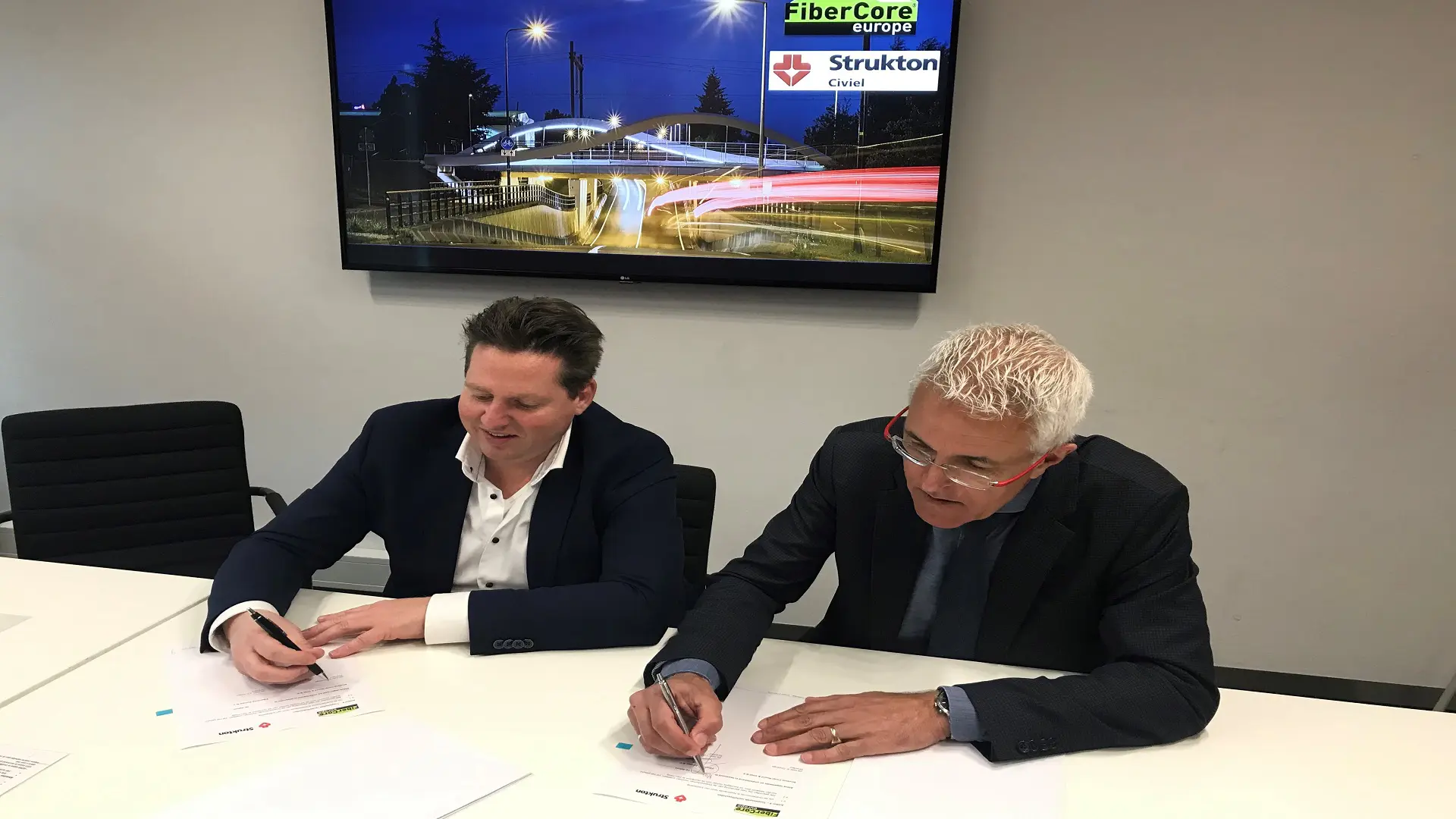
UTRECHT (THE NETHERLANDS), 9 March 2020 – More and more bridges and viaducts no longer meet the wishes and requirements of our time. Stronger structures are required due to more and heavier traffic. The outdated structures require costly maintenance and must be demolished or rebuilt. That is not a sustainable solution, say Strukton Civiel and FiberCore Europe. In collaboration with a number of European parties, FiberCore Europe developed SUREbridge: a circular solution in which a composite FRP deck is placed on an existing concrete bridge. Edwin Oostinga, Director Strukton Civiel Noord & Oost and Jan Kroon, General Director of FiberCore Europe signed a cooperation agreement today to be able to offer this sustainable solution to the market.
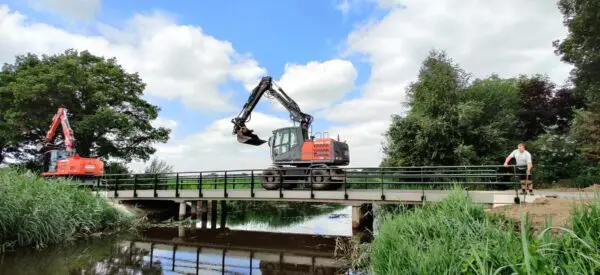
With the use of SUREbridge the bridge not only becomes stronger, the bridge can also be widened (profile). The municipality of Noordoospolder showed an interest in the method in view of their future maintenance task. Strukton Civiel and FiberCore Europe have carried out several tests and tests in this municipality. All information gathered shows that SUREbridge is a perfect alternative for renovating existing outdated concrete bridges. At present, contacts have been made with several clients for the implementation of a number of pilots, so that SUREbridge can ultimately be offered as a standard solution.
The benefits of SUREbridge a numerous. Due to a shorter construction time there is less inconvenience for road users and local residents. The bridge also has a longer lifespan with virtually no maintenance required. Existing bottlenecks can be remedied by upgrading and widening the bridge. The bridge thus meets the current standards for heavier traffic. By preventing demolition and extending the lifespan SUREbridge offers a sustainable solution and a reduction in CO2 emissions. And finally, construction costs are lower, which is good for the budgets.
Besides from SUREbridge offering a strong solution, the collaboration between Strukton Civiel and FiberCore Europe also offers added value. The parties have found each other in previous collaborations on various projects and a joint vision of the maintenance market. They have developed future-proof solutions that have potential for further development. The companies work together towards a broad network with a product that is fully focused on the future and the growing maintenance market.
SUREbridge stands for Sustainable Refurbishment or Existing Bridges. The method has been developed in collaboration with ten European countries, the United States and the European Commission. FiberCore Europe worked with Chalmers University of Technology (Sweden), University of Pisa (Italy) and AICE Consulting S.R.L. to develop SUREbridge. (Italy).
Ageing bridges can be reinforced using composite strengthening systems such as SUREbridge, which places a lightweight FRP composite panel onto the existing concrete deck. This method increases load‑bearing capacity, extends service life by up to 50 years, shortens construction time and avoids demolition, lowering CO₂ emissions by around 50%.
Current sustainable bridge‑building practices include the use of high‑strength concrete, recycled and circular structural beams, and composite panels that minimise the need for new raw materials. Circular approaches — such as reusing beams and strengthening existing structures instead of replacing them — significantly reduce waste, transport movements and environmental footprint. SUREbridge, for example, limits the use of primary materials and enables lightweight installation with minimal environmental impact.
Techniques like prefabricated composite deck overlays, fast‑curing strengthening systems and modular construction minimise on‑site work and reduce noise, traffic disruption and construction time. SUREbridge, for instance, avoids demolition and can be installed in just a few weeks, reducing inconvenience to road users and nearby residents.
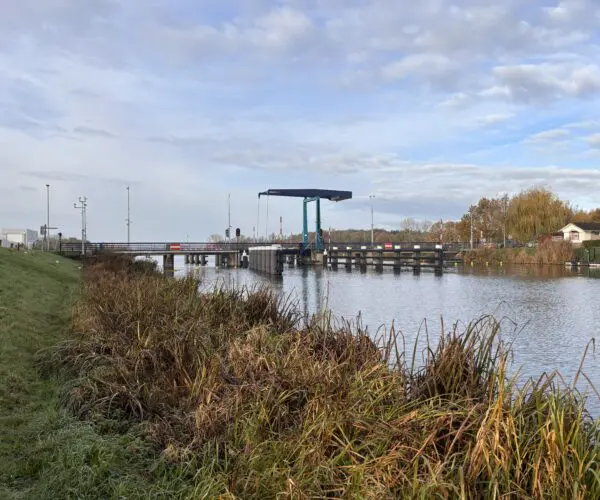
Movable bridges rely on advanced bridge‑control and monitoring systems that manage mechanical movements, ensure safety interlocks, support remote operation and monitor real‑time performance. Modern systems integrate sensors, automation and fail‑safe logic to guarantee safe bridge openings while coordinating with traffic, vessels and other infrastructure elements. Many engineering firms specialising in rail and civil infrastructure provide expertise in designing, upgrading and maintaining such systems.
Railway bridges must withstand heavy axle loads, dynamic vibrations and increasing train frequencies. Important considerations include structural stiffness, fatigue resistance, long‑term durability and compatibility with electrification systems. With many European railway bridges exceeding 50–100 years of age, strengthening methods such as composite overlays, high‑strength materials and smart monitoring systems are increasingly used to extend lifespan and ensure safe operations.
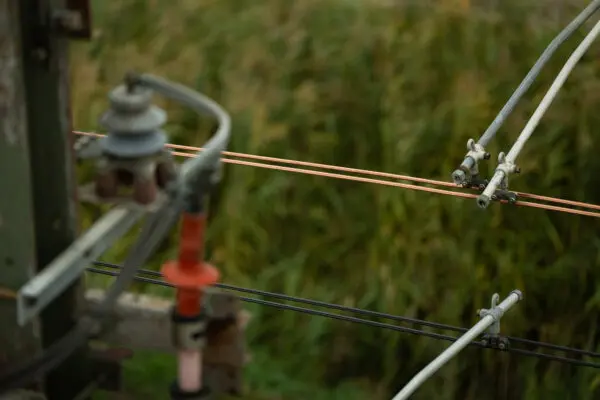
Sustainability in rail and civil engineering focuses on reducing environmental impact across the entire lifecycle of infrastructure. This includes using emission‑free equipment, circular and recycled materials, and designing assets with a longer lifespan and lower maintenance requirements. Reusing structural components—such as circular viaduct beams or recycled copper contact wires for overhead lines—significantly reduces CO₂ emissions while conserving valuable raw materials.
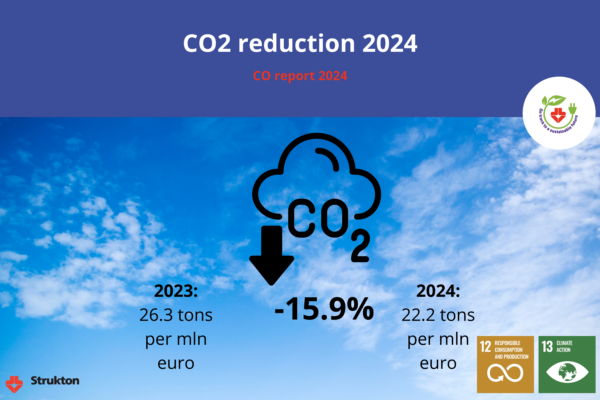
CO₂‑reduction is achieved through a combination of clean construction methods and material innovation. Key strategies include:
These measures not only reduce carbon emissions but help create more resilient, future‑proof infrastructure.