



Looking Back on a Successful InnoTrans 2026
News
25 September 2026
Read the article
Expertises
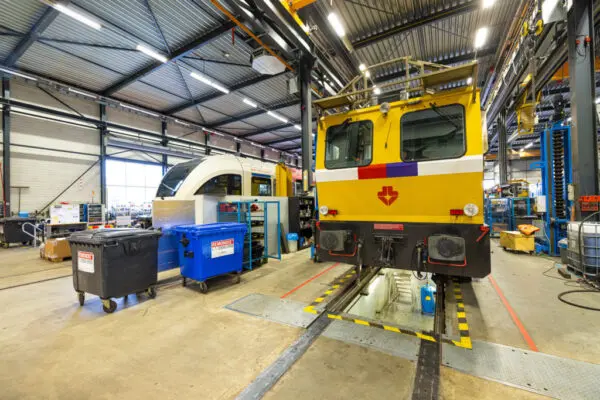
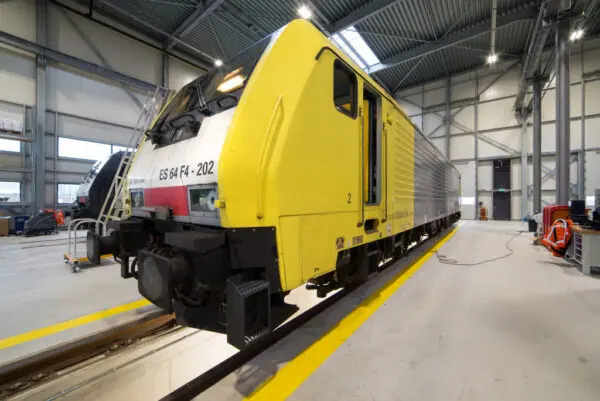
On the Maasvlakte in Rotterdam, the Locomotive Workshop Rotterdam (LWR) provides a state-of-the-art facility for the maintenance, inspection and testing of electric locomotives. Strukton made a significant contribution to this unique location by delivering key elements of the power supply and rail infrastructure. Strukton designed and installed a flexible traction power substation and overhead contact line system, enabling locomotives to be tested under all commonly used European voltage systems.
Rail vehicles in Europe operate under different overhead line voltages. International locomotives must therefore be capable of functioning under multiple power supply systems. For LWR, Strukton designed and delivered a flexible substation capable of supplying the test tracks with:
This configuration enables locomotives for various European rail corridors to be tested, inspected and certified for operation at a single location.
The combination of an advanced traction power substation, overhead contact line system and safety installations provides a secure and reliable testing environment. The system allows operators to switch between different power supply systems in real time, making testing more efficient without the need to move locomotives to other facilities.
The Locomotive Workshop Rotterdam is part of a European network of maintenance facilities for electric locomotives. The site features modern maintenance equipment, workshop tracks and dedicated test tracks, and is strategically located near the Port of Rotterdam and the European freight rail corridor network. This enables locomotives to be maintained and tested efficiently, contributing to more effective rail freight transport.
With the commissioning of the Locomotive Workshop Rotterdam, the Netherlands now has a unique testing facility where locomotives can be tested under all common European voltage systems. It is a smart, flexible and future-proof solution that supports international rail transport and improves the reliability of rolling stock.
Sales Manager
Strukton Systems

Retrofit allows existing vehicles to be modernised without the need for complete replacement. It reduces investment costs, extends the service life of the vehicle and enables sustainable upgrades while minimising operational disruption.
Customers choose Strukton because of our combined expertise in railway infrastructure, power electronics, electric propulsion, maintenance and sustainability. This enables us to provide integrated solutions throughout the entire lifecycle of rolling stock.
Yes. Through its specialised workshops, Strukton provides maintenance, technical asset management, inspections, overhauls, repairs and life extension services for rolling stock. These services are available for both Strukton-owned and third-party vehicles.
Yes. Strukton helps vehicle owners improve the sustainability of existing rolling stock. For example, diesel-powered vehicles can be converted to electric propulsion or equipped with advanced battery systems.
A traction system converts electrical energy into the power required to propel a rail vehicle. Strukton develops and integrates traction solutions for a variety of applications, ranging from shunting locomotives to metro vehicles and trams.
Strukton does not manufacture trains, but provides specialist services and technical solutions for rolling stock. These include electric drivetrains, traction systems, traction inverters, battery systems, maintenance, inspections, overhauls and retrofit projects for rail vehicles.
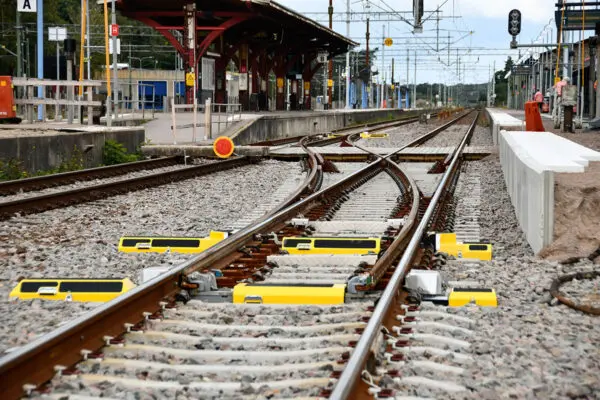
Converter stations and feeder stations ensure that rail networks receive the correct voltage and frequency, even as traffic intensifies or train weights increase. Mobile and permanent installations provide flexibility, strengthen weak network sections and support international rail corridors with varying technical requirements.