





Construction partner for pioneering SAF plant DSL‑01 by SkyNRG and Technip Energies
News
19 February 2026
Read the article
Expertises
Siebens Spoorbouw, part of Strukton Rail Belgium, has extensive experience in monitoring industrial rail systems and crane tracks for production facilities. Crane tracks and automated rail structures are critical to our customers’ operations. Any disruption caused by an obstruction in the transport infrastructure must be avoided at all times. Regular monitoring is therefore essential.
Industrial crane tracks and rail structures are often difficult to access for inspection. These locations are typically crowded with machinery, and crane tracks are often positioned close to the ceiling, making hydraulic platforms impractical.
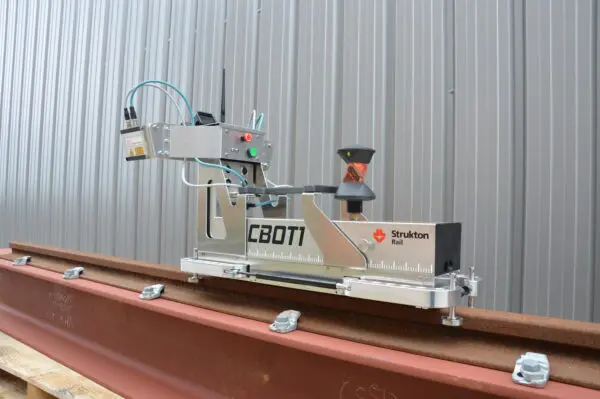
Siebens Spoorbouw has developed the innovative CBOT-1 measurement robot – the first remote-controlled robot capable of measuring the height, alignment, and span of rail and crane tracks. The robot is mounted at a specific point on the track and can reach any position from there. In a single scanning movement, it can measure up to 200 metres of rail and crane tracks.
The precise measurements provided by CBOT-1 enable fast and targeted monitoring of crane track infrastructure. The data shows how straight and level the track is and determines the rail gauge. Thanks to laser scanners, we can also detect wear. A photo is taken every second to document any anomalies. These clear measurement results allow us to create a preventive maintenance plan, scheduling adjustments or replacements at the most convenient time for the customer – preventing costly downtime.
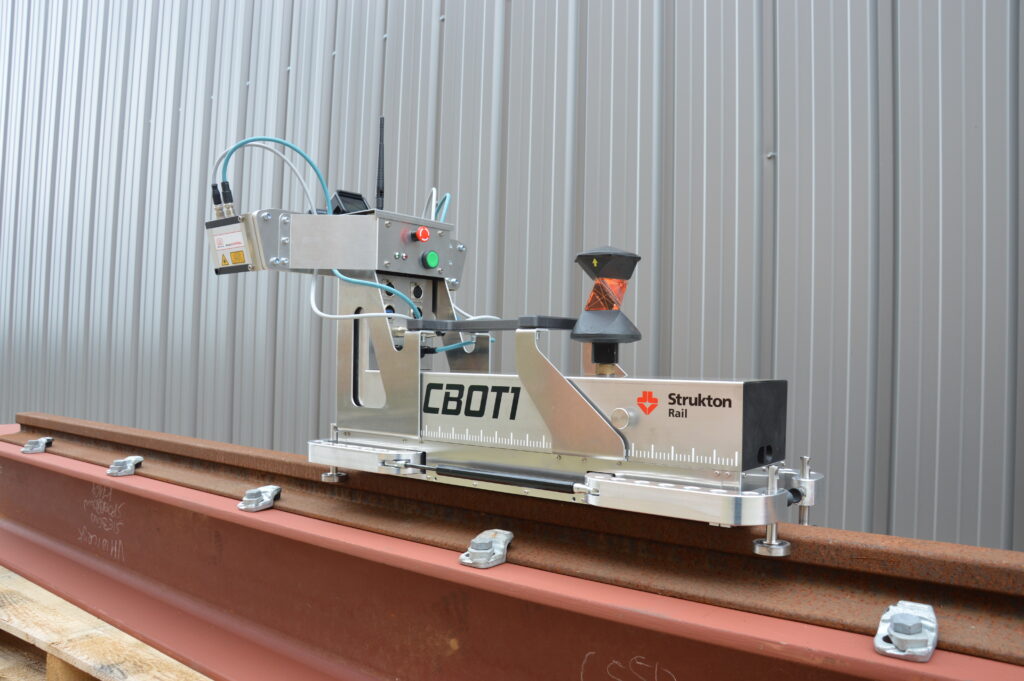
The first remote-controlled robot capable of measuring the height, alignment, and span of rail and crane tracks.
The CBOT-1 measurement robot began as an internal innovation idea. It consists of two components: the mechanical design was developed in-house, while the electronics were designed by an external partner. A major added benefit is improved safety for our colleagues – no more manual measurements in hard-to-reach areas, as everything is now done remotely.

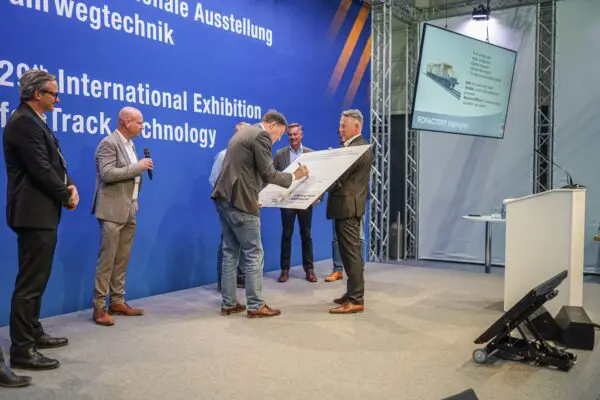

Industrial crane rails and internal rail systems are often hard to reach and require precise inspection to prevent failures. The CBOT‑1 measuring robot, developed by Siebens Spoorbouw (Strukton Rail Belgium), is the first remote‑controlled measurement robot capable of scanning up to 200 metres in a single run, capturing height, alignment, track width, rail profile and wear via laser technology. This enables accurate, preventive maintenance planning without exposing workers to hazardous environments.
Industrial rail sidings serve as lifelines for raw materials and finished products, ensuring dependable freight flows between mainline networks and factory grounds. Dedicated maintenance regimes, risk‑based inspections and availability‑driven asset management are crucial to guarantee safety and uptime. Managed networks can include more than 120–150 industrial rail connections, covering sidings, switches, crossings and crane tracks — ensuring continuous logistical performance for industrial operations.
Industrial sites benefit from solutions that reduce disruption to ongoing processes. Techniques such as Concrete Canvas, liquid‑tight containment upgrades, cooling‑tower renovations, trench sealing and plastic‑lined pit repairs enable rapid installation while keeping production active. In complex conditions — including outdated or contaminated infrastructure — modern relining methods (such as GRE liner systems) extend asset lifespan without extensive excavation.
Industrial facilities often need heavy‑duty civil engineering, including large‑diameter sewer systems, earthworks, paving for factories, concrete and steel structures, and pile foundations. These tasks must be completed with extreme precision and compliance, especially when working around contaminated soil, active installations or limited working space. Long‑term industrial locations such as Chemelot depend on high‑quality engineering during construction, renovation and maintenance phases. [struktonwe…enbeton.nl], [chemelot.nl]
Industrial environments rely on uninterrupted processes, making continuity, safety and quality the core requirements for all supporting infrastructure. Complex sites such as chemical parks operate 24/7, and even minor disruptions in drainage, foundations, pipelines or internal transport routes can halt production and create major safety risks. Reliable infrastructure — from sewer systems and foundations to drainage and utility lines — ensures smooth operations under demanding conditions.
Safety is maintained through strict operational procedures in combination with modelling and prioritisation based on asset criticality. Intelligent asset management and real‑time monitoring technologies help identify risks at an early stage and ensure trains can continue to operate safely. These systems support long‑term investment planning and maintain the reliability of the rail network.
Because European rail networks are heavily used, maintenance is often carried out during night‑time or weekend possessions when fewer trains are running. High‑traffic lines require carefully planned maintenance windows to minimise service disruptions while ensuring infrastructure remains safe and in good condition.