




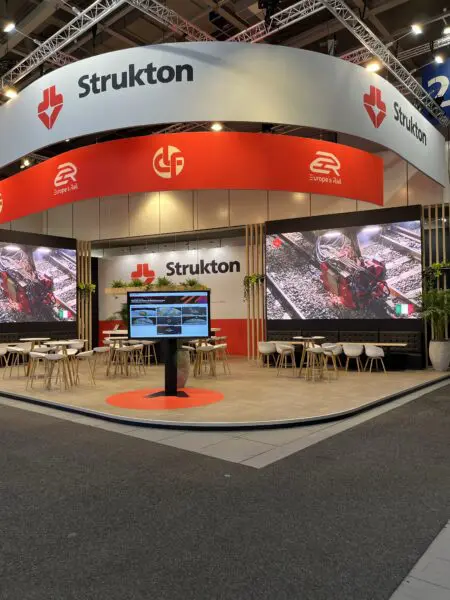
Looking Back on a Successful InnoTrans 2026
News
25 September 2026
Read the article
Expertise
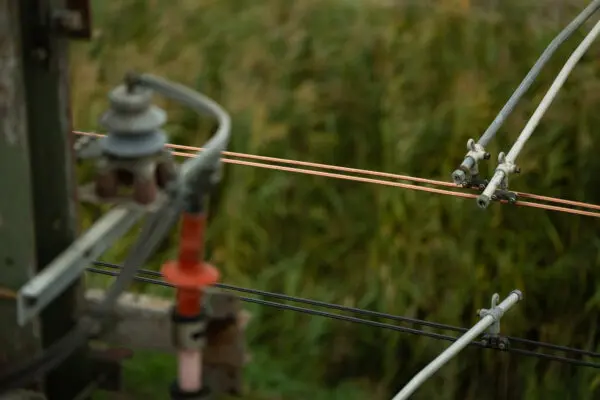
Winter weather can have a major impact on rail operations. At low temperatures, water droplets on the overhead contact line can freeze and form ice. This reduces the contact between the overhead line and the pantograph of a train or tram, which can lead to disruptions, damage to rolling stock and even service outages. For infrastructure managers, this is a recurring challenge. Traditional solutions, such as running empty trains overnight to prevent ice build-up or heating the overhead line, are effective but costly and energy-intensive.
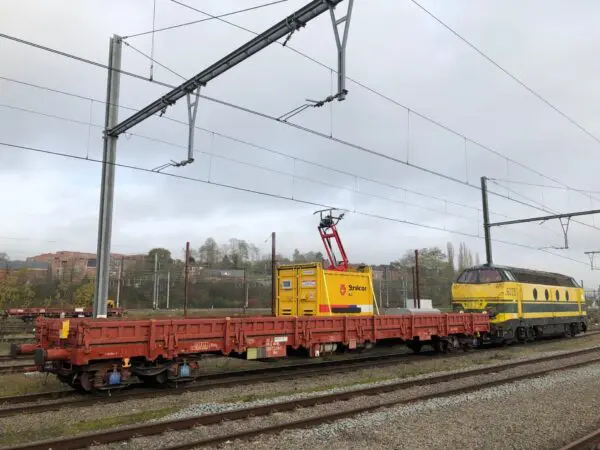
With IceGuard, Strukton offers a sustainable and efficient solution to prevent ice formation on overhead contact lines. This innovative system uses a specially developed spray unit to apply a biodegradable protective agent to the contact wire. The protective layer prevents freezing fog from adhering to the overhead line and remains effective for up to 45 days.
Thanks to this long-lasting protection, only two to three treatments per winter are typically required. With a treatment capacity of approximately 30 kilometres of overhead line per hour, IceGuard can also be deployed quickly and efficiently across large sections of the rail network.
IceGuard has been successfully used in Belgium and France for several years.
An integrated sensor enables the spray unit to follow the overhead contact line accurately and completely without physical contact. As a result, the contact wire is not subjected to stress or damage during treatment. This makes IceGuard not only highly effective but also safe for existing rail infrastructure.
Sustainability is at the heart of the IceGuard design. The protective fluid used is biodegradable: after 28 days, approximately 95 per cent of its components have naturally broken down. IceGuard therefore combines reliable protection against winter weather conditions with a minimal environmental impact.
Sales Manager
Strukton Rail Belgium


Safety is maintained through strict operational procedures in combination with modelling and prioritisation based on asset criticality. Intelligent asset management and real‑time monitoring technologies help identify risks at an early stage and ensure trains can continue to operate safely. These systems support long‑term investment planning and maintain the reliability of the rail network.
Because European rail networks are heavily used, maintenance is often carried out during night‑time or weekend possessions when fewer trains are running. High‑traffic lines require carefully planned maintenance windows to minimise service disruptions while ensuring infrastructure remains safe and in good condition.
Maintenance priority is determined using asset condition models and long‑term asset management strategies. This enables companies and railway managers to forecast the future state of critical rail components, helping planners intervene at the optimal moment. Intelligent asset‑management systems make it possible to compare scenarios, estimate remaining service life and plan renewals efficiently based on operational needs and strategic investment priorities.
Modern railway maintenance combines condition monitoring, inspection data, advanced algorithms and expert domain knowledge to support data‑driven decision‑making. Digital tools and predictive analytics help maintenance teams detect issues earlier, schedule interventions more effectively and continuously improve the maintenance cycle. These approaches are increasingly adopted across Europe to boost reliability and reduce unplanned downtime
The purpose of railway maintenance is to ensure the safety of passengers and train operations, prevent failures and delays, extend the lifespan of rail assets and avoid costly repairs by resolving issues early. Maintenance is vital for keeping high‑usage rail networks reliable and efficient, reducing disruptions and supporting sustainable rail operations.
Railway maintenance refers to all activities required to keep rail infrastructure safe, reliable and in optimal condition. This includes tracks, switches, overhead lines, sleepers, ballast, power supply, cables, ducts and signalling systems. Routine inspections and major renewal activities such as rail grinding, tamping and ballast maintenance are essential to ensuring long‑term track performance. Asset management plays a crucial role in rail maintenance.