







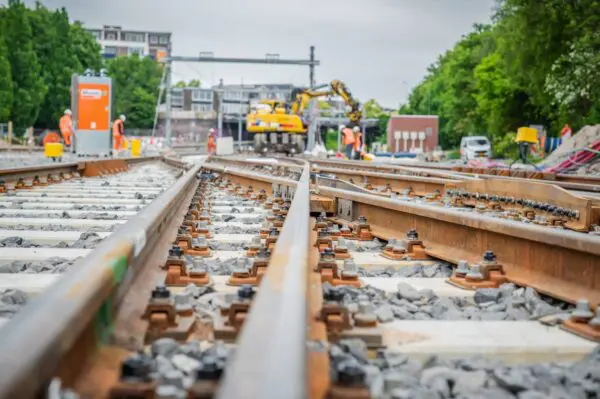
Signalling and Telecom Works at Stockholm Central Station
News
09 February 2026

Read the article

Expertises
Overhead line technicians frequently work above shoulder height, which places significant strain on the back, upper arms and shoulders. When you’re young, you may not notice it much, but as you get older the effects of all those awkward working positions become increasingly apparent. We want our colleagues to stay healthy and fit throughout their careers and beyond. Awareness and guidance are important, but innovations that improve working conditions are equally essential. The development of an integrated exoskeleton is one such innovation.
An exoskeleton can ease physically demanding work that involves intensive use of the arms, especially when tasks are performed at chest height or above. The technician’s arms rest in special support “cups”, and as soon as an object is lifted above shoulder height, the exoskeleton’s springs are activated to provide assistance.
We therefore began conducting field tests using an exoskeleton for overhead line work. Various trials quickly demonstrated that the exoskeleton is effective. Technicians experience a sense of weightlessness in their arms, making lifting or tightening components significantly less strenuous.
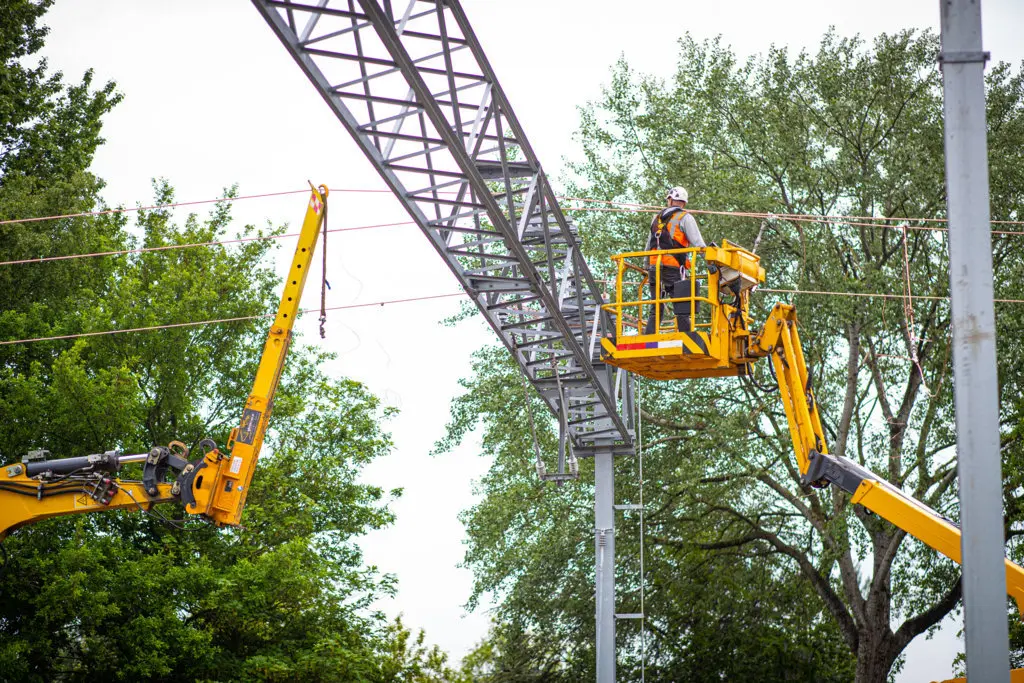
However, the trials also showed that the downward movement in the current exoskeleton produces too much resistance, which in certain situations requires extra effort. In addition, it proved very difficult to wear the exoskeleton together with fall protection equipment — which is absolutely essential when working at height. At the same time, the total weight of both pieces of personal protective equipment must not become so heavy that it creates new problems for the technician.
Together with RoboHouse in Delft, Strukton is developing an integrated exoskeleton with a built‑in fall‑arrest harness, which will in turn be integrated into work clothing. The outlines of this integrated design are now complete. We expect to be able to test the first prototype in the field by the end of 2023.
The development of the exoskeleton is just one of many Strukton innovations aimed at improving working conditions. In recent years, Strukton Catenary Europe has introduced several advances, including new screw tools to prevent grinding sparks and chromium‑6 exposure, lighter fall‑arrest harnesses, Neotecs (innovative rail-based aerial work platforms), lifting beams for holding contact wires in place, and a special scissor‑lift platform on a wagon (HBW Light) that enables safer and more ergonomic work at height.


Rail construction plays a crucial role in Europe’s shift towards low‑carbon mobility. By expanding and modernising electric rail infrastructure, the sector enables cleaner transport that produces significantly lower CO₂ emissions than road or air travel. At the same time, energy‑efficient work methods—such as using low‑emission machinery, hybrid traction systems and digital tools that extend asset life—help reduce the environmental footprint of construction activities. Together, these developments strengthen a sustainable mobility network and accelerate progress towards European climate goals.
In rail construction, highly specialised machinery ensures that work is carried out safely, efficiently and with minimal disruption. Typical equipment includes track‑laying trains, tamping machines, rail welding units, road‑rail excavators and ballast profiling systems, each designed to build or restore track structures with precision. These machines support both large‑scale track installation and daily maintenance operations. Innovations in automation and robotics are increasingly enhancing productivity and safety, helping infrastructure managers deliver consistent quality in a growing European rail network.
Safety is maintained through strict operational procedures in combination with modelling and prioritisation based on asset criticality. Intelligent asset management and real‑time monitoring technologies help identify risks at an early stage and ensure trains can continue to operate safely. These systems support long‑term investment planning and maintain the reliability of the rail network.
Because European rail networks are heavily used, maintenance is often carried out during night‑time or weekend possessions when fewer trains are running. High‑traffic lines require carefully planned maintenance windows to minimise service disruptions while ensuring infrastructure remains safe and in good condition.
Maintenance priority is determined using asset condition models and long‑term asset management strategies. This enables companies and railway managers to forecast the future state of critical rail components, helping planners intervene at the optimal moment. Intelligent asset‑management systems make it possible to compare scenarios, estimate remaining service life and plan renewals efficiently based on operational needs and strategic investment priorities.
Modern railway maintenance combines condition monitoring, inspection data, advanced algorithms and expert domain knowledge to support data‑driven decision‑making. Digital tools and predictive analytics help maintenance teams detect issues earlier, schedule interventions more effectively and continuously improve the maintenance cycle. These approaches are increasingly adopted across Europe to boost reliability and reduce unplanned downtime
The purpose of railway maintenance is to ensure the safety of passengers and train operations, prevent failures and delays, extend the lifespan of rail assets and avoid costly repairs by resolving issues early. Maintenance is vital for keeping high‑usage rail networks reliable and efficient, reducing disruptions and supporting sustainable rail operations.