






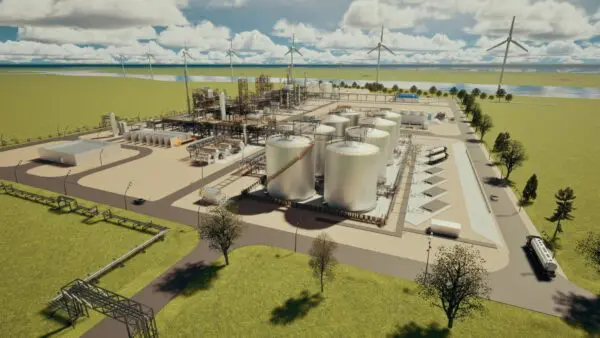
Construction partner for pioneering SAF plant DSL‑01 by SkyNRG and Technip Energies
News
19 February 2026
Read the article
Expertises
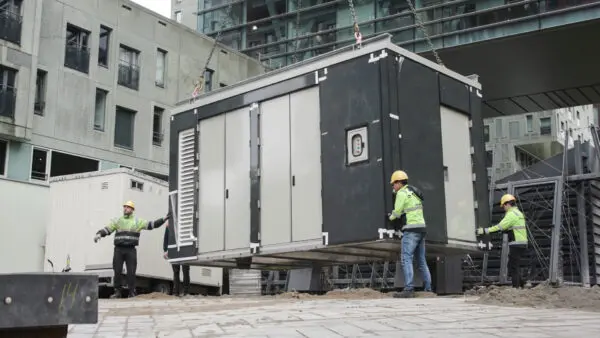
Public transport operators with ambitious plans often face years of waiting for new connections to the electricity grid before more trams can run in the city. That era is over. Strukton introduces the next generation of ‘click & go’ substations for tram networks: the Public Transport Energy Bank.
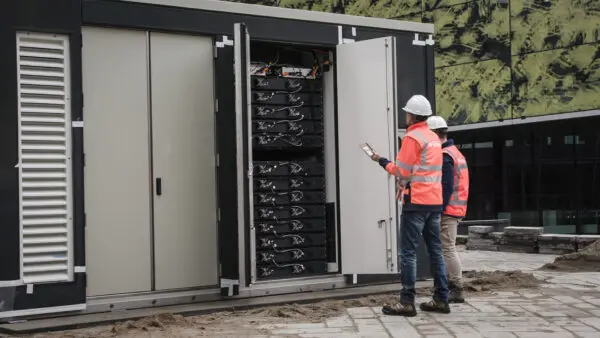
The Energy Bank is a fully functional substation that strengthens the power supply for trams on the existing rail network – without requiring a connection to the electricity grid. It stores energy via the overhead line and delivers that power back to passing trams when needed.
This unplugged substation is quick to install and easy to connect to the overhead line. It can serve as a permanent reinforcement of the energy supply or as a temporary energy boost during diversions and events – truly ‘click & go’.
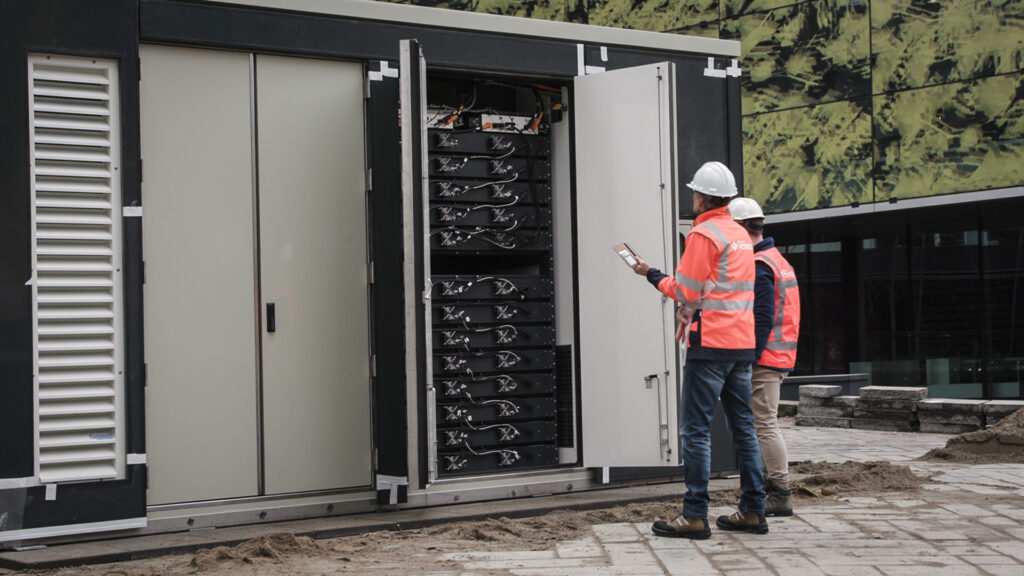
The Energy Bank is designed to perform optimally using batteries from the first generation of city and regional buses. This way, these high-quality batteries get the second life they deserve.
This powerful, elegantly designed solution takes up no more space than a single parking spot. And it gives something back to the neighbourhood where it’s installed – functioning as a charging station for electric vehicles and as a local energy storage unit.
“ The Energy Bank – the surprisingly versatile ‘click & go’ energy solution for ambitious public transport operators.”.”
Innovator
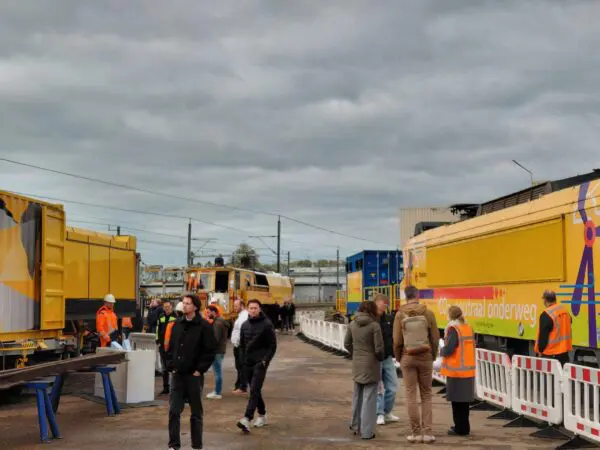


By 2050, the infrastructure sector aims to be fully climate‑neutral. This future includes:
The transition is already underway, driven by innovation, collaboration and long‑term thinking.
Zero‑emission equipment refers to machinery that operates without producing exhaust gases, typically powered by electricity or batteries. Examples include:
This equipment eliminates local emissions, improves air quality around work sites, reduces noise pollution and helps clients comply with increasingly strict sustainability requirements.
Infrastructure projects increasingly rely on advanced sustainable technologies, such as:
These innovations drive measurable environmental benefits throughout the asset lifecycle.
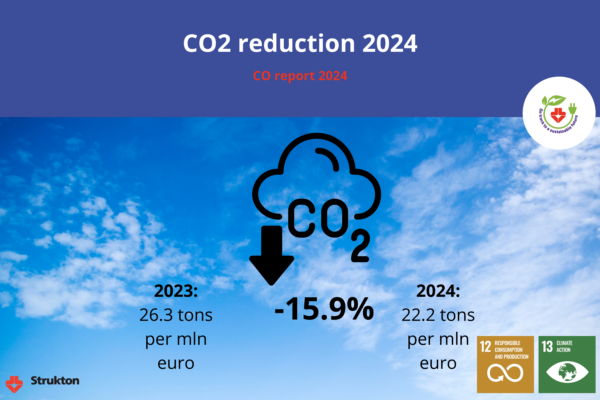
CO₂‑reduction is achieved through a combination of clean construction methods and material innovation. Key strategies include:
These measures not only reduce carbon emissions but help create more resilient, future‑proof infrastructure.
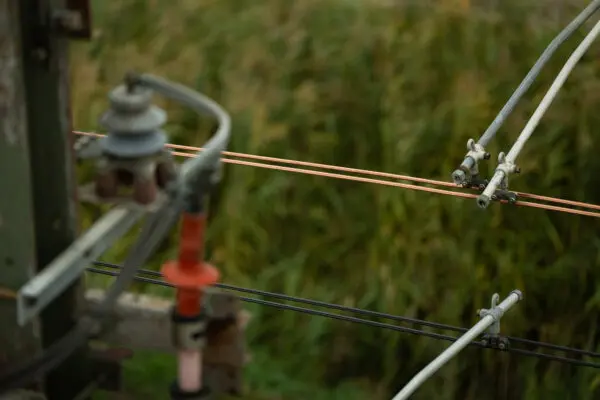
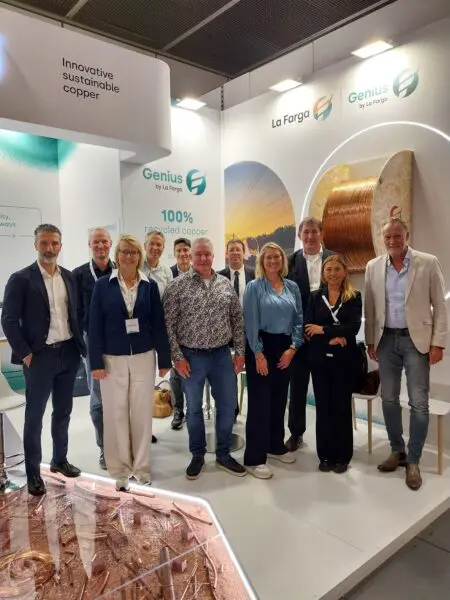
Sustainability in rail and civil engineering focuses on reducing environmental impact across the entire lifecycle of infrastructure. This includes using emission‑free equipment, circular and recycled materials, and designing assets with a longer lifespan and lower maintenance requirements. Reusing structural components—such as circular viaduct beams or recycled copper contact wires for overhead lines—significantly reduces CO₂ emissions while conserving valuable raw materials.
Converter stations and feeder stations ensure that rail networks receive the correct voltage and frequency, even as traffic intensifies or train weights increase. Mobile and permanent installations provide flexibility, strengthen weak network sections and support international rail corridors with varying technical requirements.
Reliable rail transport depends on dedicated AC and DC power‑supply systems, including converter stations, feeder stations, traction‑power substations and mobile energy‑supply units. These systems enable stable and resilient power delivery for heavy rail, metro, tram and light‑rail networks across Europe.