




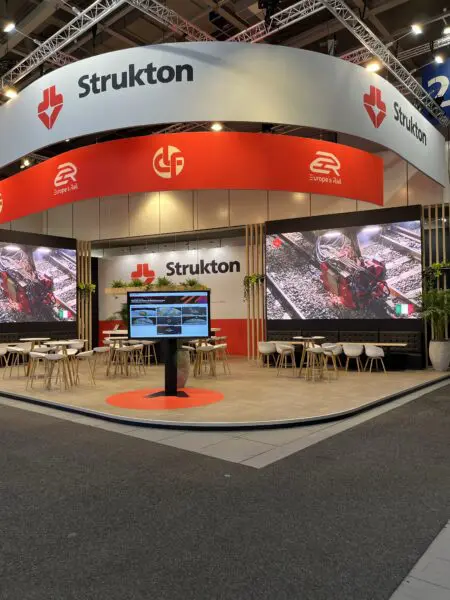
Looking Back on a Successful InnoTrans 2026
News
25 September 2026
Read the article
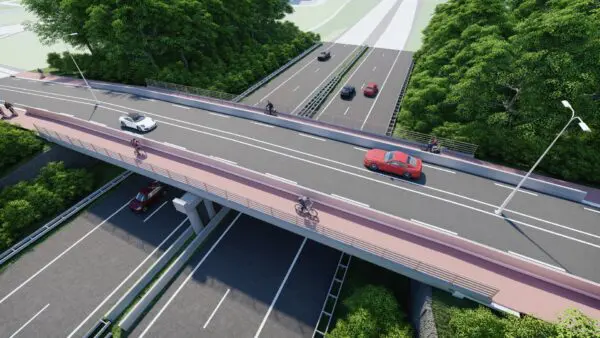
The Dutch government aims to achieve a fully circular economy by 2050. Rijkswaterstaat, the Dutch infrastructure authority, intends to move even faster, working entirely climate-neutral and circular by 2030. This ambition also applies to the construction, replacement and renovation of bridges and viaducts. To support this goal, Rijkswaterstaat launched an innovation challenge to the market in 2020: develop solutions for circular viaducts
GBN Group, Strukton, Antea Group and Nebest combined their expertise to close the loop on high-quality reuse in viaduct construction. Together, they developed the Closing the Loop concept. A total of 39 participants submitted proposals. In April 2022, Closing the Loop was selected as one of three winning entries by Rijkswaterstaat and was given the opportunity to realise the Netherlands’ first viaduct built using reused structural components, located on the A76 motorway.

A unique aspect of this project is the partnership between Rijkswaterstaat and Closing the Loop. Rather than following a traditional client-contractor relationship, both parties work together to realise this innovation.
Within the consortium:
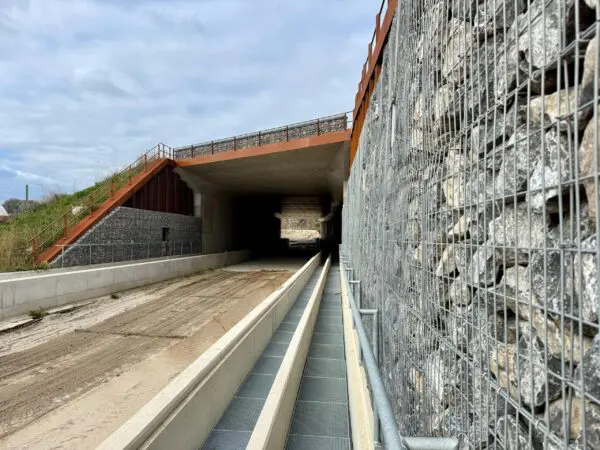
At Daelderweg and the A76 near Nuth, there is currently a grade-separated crossing consisting of two viaducts, one built in 1938 and another in 2004. To prevent valuable reusable materials from being lost, Closing the Loop investigated the reuse potential of the structures’ components.
Extensive research showed that most of the existing components still have a remaining service life of at least 100 years. These materials can therefore be successfully incorporated into a new circular viaduct. [strukton.nl]

Rijkswaterstaat has taken a further step towards the construction of a circular viaduct over the A76 near Nuth in the province of Limburg by awarding Strukton the contract for the next phase of the project, building on the Closing the Loop initiative. During this phase, preparatory activities, testing, studies and design work have been carried out with the objective of constructing a new circular viaduct over the A76. The project will make high-value use of components recovered from three existing viaducts.
“ Rijkswaterstaat’s ambition is to be climate-neutral and to operate according to circular principles. We seek to reduce our CO₂ emissions wherever possible, for example through sustainable procurement and contract award processes. The reuse of materials from the viaduct in Nuth is a great example of how we put our circular ambitions into practice. This project is the result of a programme in which we challenged the market to develop innovative ideas for circular viaducts. In this way, we stimulate the transition from linear to circular working processes.” Roger Mol, Director of Sustainability and Living Environment and Chief Procurement Officer at Rijkswaterstaat.


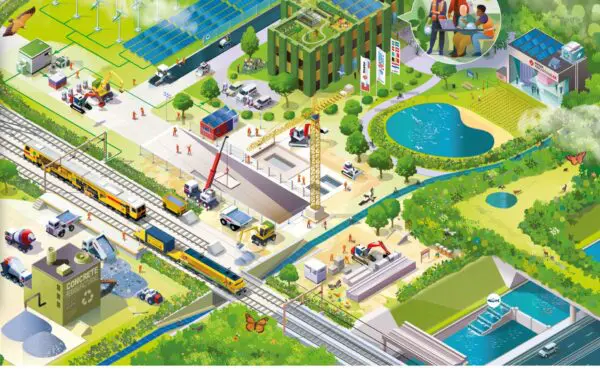
By 2050, the infrastructure sector aims to be fully climate‑neutral. This future includes:
The transition is already underway, driven by innovation, collaboration and long‑term thinking.
Zero‑emission equipment refers to machinery that operates without producing exhaust gases, typically powered by electricity or batteries. Examples include:
This equipment eliminates local emissions, improves air quality around work sites, reduces noise pollution and helps clients comply with increasingly strict sustainability requirements.
Infrastructure projects increasingly rely on advanced sustainable technologies, such as:
These innovations drive measurable environmental benefits throughout the asset lifecycle.
CO₂‑reduction is achieved through a combination of clean construction methods and material innovation. Key strategies include:
These measures not only reduce carbon emissions but help create more resilient, future‑proof infrastructure.
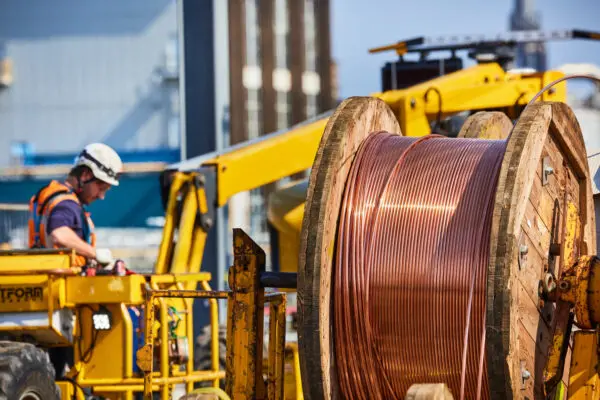
Sustainability in rail and civil engineering focuses on reducing environmental impact across the entire lifecycle of infrastructure. This includes using emission‑free equipment, circular and recycled materials, and designing assets with a longer lifespan and lower maintenance requirements. Reusing structural components—such as circular viaduct beams or recycled copper contact wires for overhead lines—significantly reduces CO₂ emissions while conserving valuable raw materials.
Railway bridges must withstand heavy axle loads, dynamic vibrations and increasing train frequencies. Important considerations include structural stiffness, fatigue resistance, long‑term durability and compatibility with electrification systems. With many European railway bridges exceeding 50–100 years of age, strengthening methods such as composite overlays, high‑strength materials and smart monitoring systems are increasingly used to extend lifespan and ensure safe operations.
Movable bridges rely on advanced bridge‑control and monitoring systems that manage mechanical movements, ensure safety interlocks, support remote operation and monitor real‑time performance. Modern systems integrate sensors, automation and fail‑safe logic to guarantee safe bridge openings while coordinating with traffic, vessels and other infrastructure elements. Many engineering firms specialising in rail and civil infrastructure provide expertise in designing, upgrading and maintaining such systems.