






Upgrade Rail Network Rijswijk-Rotterdam
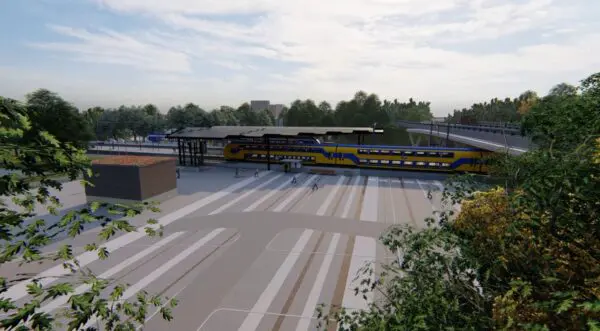
Discover the project
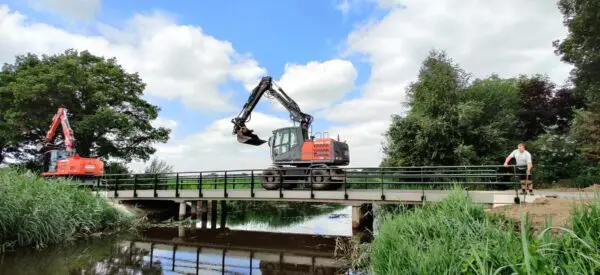
Strukton designs, constructs and maintains bridges and viaducts in the Netherlands, with innovative techniques and sustainable and circular solutions.
Many bridges are reaching the end of their service life, creating a major challenge for replacement and renovation. In the Netherlands, Strukton provides innovative solutions to extend the lifespan of existing structures. Together with FiberCore Europe, we developed the SUREbridge concept: by reinforcing existing bridge decks with a composite layer, we significantly increase durability. This approach reduces construction time, lowers costs and minimises environmental impact – making SUREbridge a sustainable choice. In addition, we work with trusted partners to promote high-quality reuse of materials and components.
Building the infrastructure of the future requires more than technical excellence – it demands sustainable and circular solutions. For viaducts, we focus on material reuse and apply eco-friendly asphalt mixtures, including recycled materials. We are also proud partners in the an initiative that advocates for the reuse of structural beams, helping to reduce waste and carbon footprint.
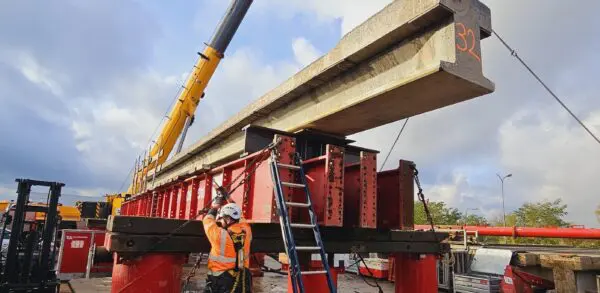

Ageing bridges can be reinforced using composite strengthening systems such as SUREbridge, which places a lightweight FRP composite panel onto the existing concrete deck. This method increases load‑bearing capacity, extends service life by up to 50 years, shortens construction time and avoids demolition, lowering CO₂ emissions by around 50%.
Current sustainable bridge‑building practices include the use of high‑strength concrete, recycled and circular structural beams, and composite panels that minimise the need for new raw materials. Circular approaches — such as reusing beams and strengthening existing structures instead of replacing them — significantly reduce waste, transport movements and environmental footprint. SUREbridge, for example, limits the use of primary materials and enables lightweight installation with minimal environmental impact.
Techniques like prefabricated composite deck overlays, fast‑curing strengthening systems and modular construction minimise on‑site work and reduce noise, traffic disruption and construction time. SUREbridge, for instance, avoids demolition and can be installed in just a few weeks, reducing inconvenience to road users and nearby residents.
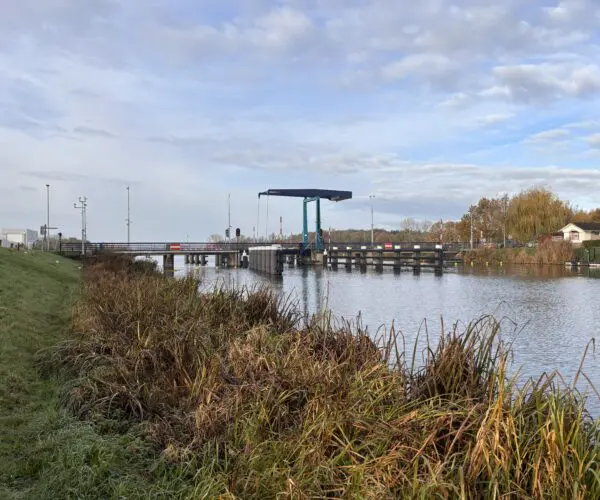
Movable bridges rely on advanced bridge‑control and monitoring systems that manage mechanical movements, ensure safety interlocks, support remote operation and monitor real‑time performance. Modern systems integrate sensors, automation and fail‑safe logic to guarantee safe bridge openings while coordinating with traffic, vessels and other infrastructure elements. Many engineering firms specialising in rail and civil infrastructure provide expertise in designing, upgrading and maintaining such systems.
Railway bridges must withstand heavy axle loads, dynamic vibrations and increasing train frequencies. Important considerations include structural stiffness, fatigue resistance, long‑term durability and compatibility with electrification systems. With many European railway bridges exceeding 50–100 years of age, strengthening methods such as composite overlays, high‑strength materials and smart monitoring systems are increasingly used to extend lifespan and ensure safe operations.